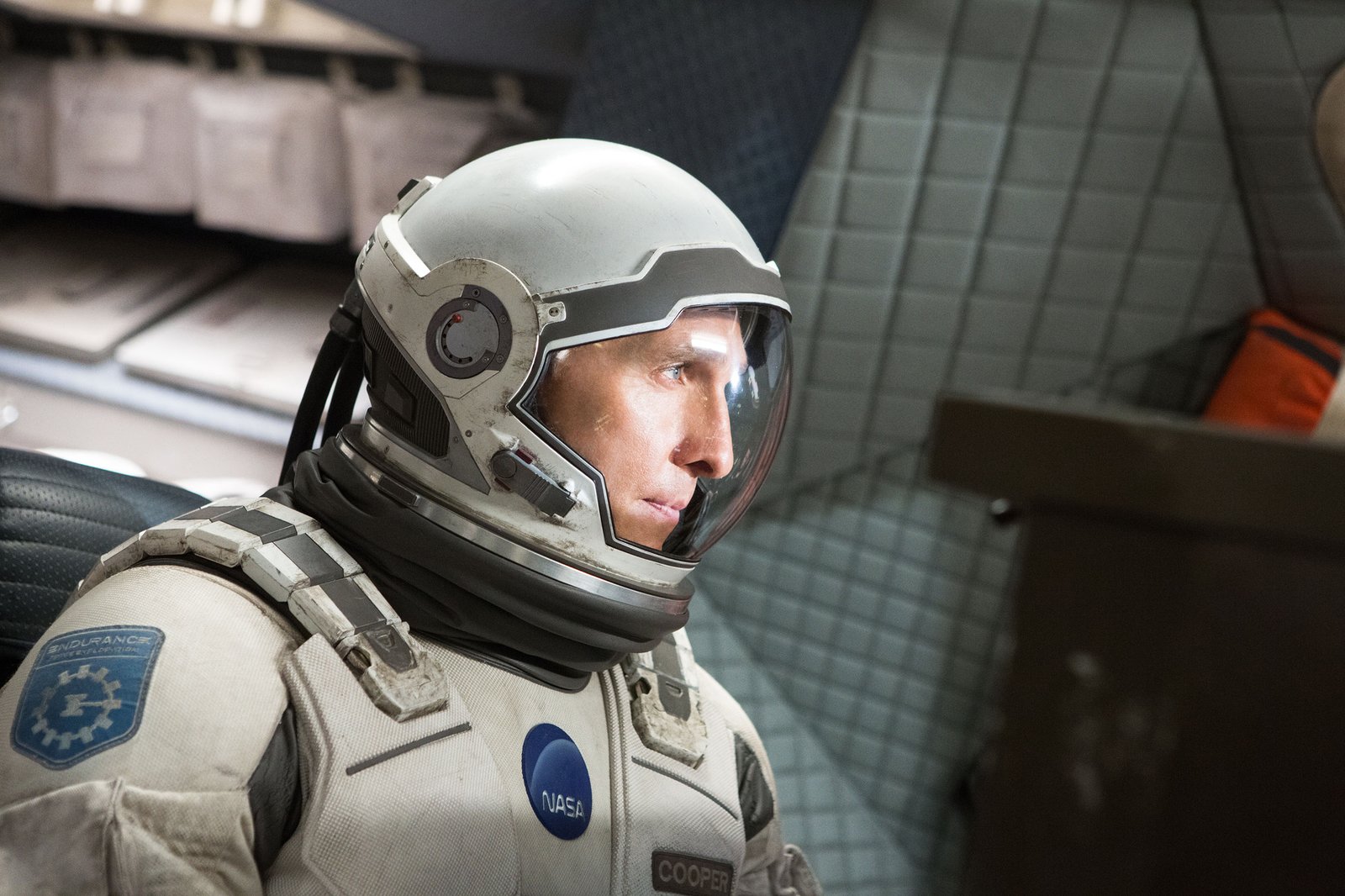
The 2014 science fiction epic Interstellar, directed by Christopher Nolan and supervised by visual effects artist Paul Franklin, represents an unprecedented paradigm shift in the technological integration of theoretical physics and computational computer-generated imagery (CGI). Rather than treating cosmic phenomena as abstract, artistic interpretations, Nolan’s production team collaborated directly with Nobel Prize-winning astrophysicist Kip Thorne to convert mathematical Einsteinian field equations into raw rendering source code. This radical methodology birthed DNGR (Double Negative Gravitational Renderer), a proprietary software pipeline engineered specifically to simulate the behavior of light tracing around a spinning supermassive black hole. At the absolute center of this technological achievement is Gargantua, a digital asset that stands as the first mathematically accurate visual representation of a black hole in cinematic history.
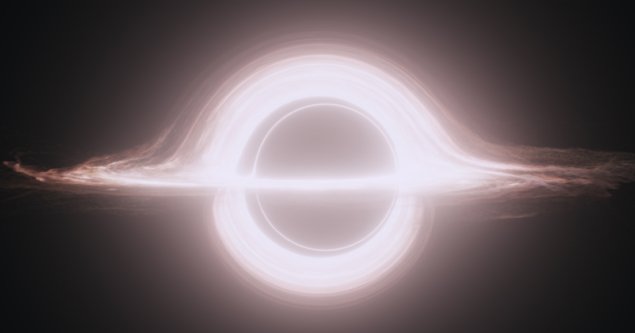
In this technical visual effects breakdown, we dissect the computational pipelines required to render relativistic space-time distortion, examine the procedural mechanics of accretion disk simulation, and analyze how Nolan weaponized scientific data to maximize cinematic dread.
1. Relativistic Ray-Tracing and the Physics of DNGR Software
To construct the visual profile of Gargantua, the software engineers at Double Negative abandoned the traditional, non-relativistic rendering shortcuts common in Hollywood post-production. Standard commercial renderers operate on the assumption that light travels along straight Euclidean vectors. However, the immense gravitational field of a black hole accelerates space-time to such a degree that light paths warp violently around the event horizon—a phenomenon known as gravitational lensing.
To accurately capture this distortion, the team wrote DNGR from scratch, inverting the ray-tracing process. Instead of casting light paths from a light source to the camera lens, the custom software traced individual pixel vectors backward from the virtual camera sensor into the warped space-time matrix of the black hole. This computational brute-force approach required single frames to take up to 100 hours to render, generating over 800 terabytes of raw scientific data. This absolute commitment to pure, uncompressed computational truth mirrors the rigorous digital data principles we observed when analyzing the green typographic arrays in our The Matrix visual effects breakdown, proving that modern sci-fi achieves its most terrifying atmosphere when physical reality is stripped down to its mathematical code.
The Visual Asymmetry of the Accretion Disk
The resulting visual output delivered a profound surprise to both the visual effects animators and the scientific community. The mathematical simulation revealed that the glowing accretion disk of gas and dust surrounding Gargantua would not appear as a flat, Saturn-like ring from a distance.
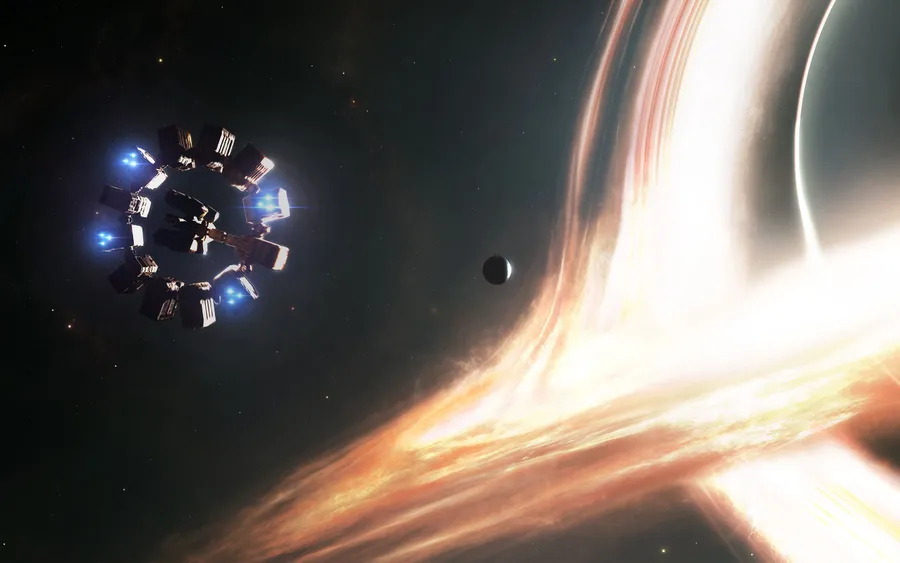
Instead, the intense gravitational lensing pulls the light from the rear of the disk upward and downward, enveloping the dark sphere in a spectacular, halo-like silhouette. Furthermore, due to the relativistic Doppler beaming effect caused by the extreme spin of the black hole, the side of the disk rotating toward the camera appears significantly brighter and bluer, while the receding side fades into a dim, red-shifted haze, maximizing the atmospheric hostility of the frame.
2. Procedural Volumetric Modeling and the Tesseract Matrix
Complementing the astronomical precision of Gargantua, the third act of Interstellar demanded a visual manifestation of a higher-dimensional environment: the Tesseract. To render a five-dimensional physical reality inside a three-dimensional cinematic screen, Nolan rejected the standard, fluid abstractions often associated with digital dream sequences, opting instead for a rigid, architectural approach based on procedural volumetric asset modeling.
The Mathematical Architecture of Time
The asset team mapped the interior of the Tesseract as a dense, mathematical matrix where time is extruded as a tangible physical dimension. Every line within the complex lattice represents a solid timeline of Murph’s bedroom bookshelf, intersecting across multiple temporal axes. To control this colossal grid without crashing the rendering farm, the software team deployed complex procedural scripting libraries.
These scripts generated millions of high-resolution geometrical threads algorithmically based on the distance of Cooper’s virtual camera asset. The result is a cold, labyrinthine visual texture that strips time of its human, fluid emotional weight, turning memory into a clinical, mechanical, and infinitely repeating data bank.
The Synthesis of IMAX Practicality and High-Poly Assets
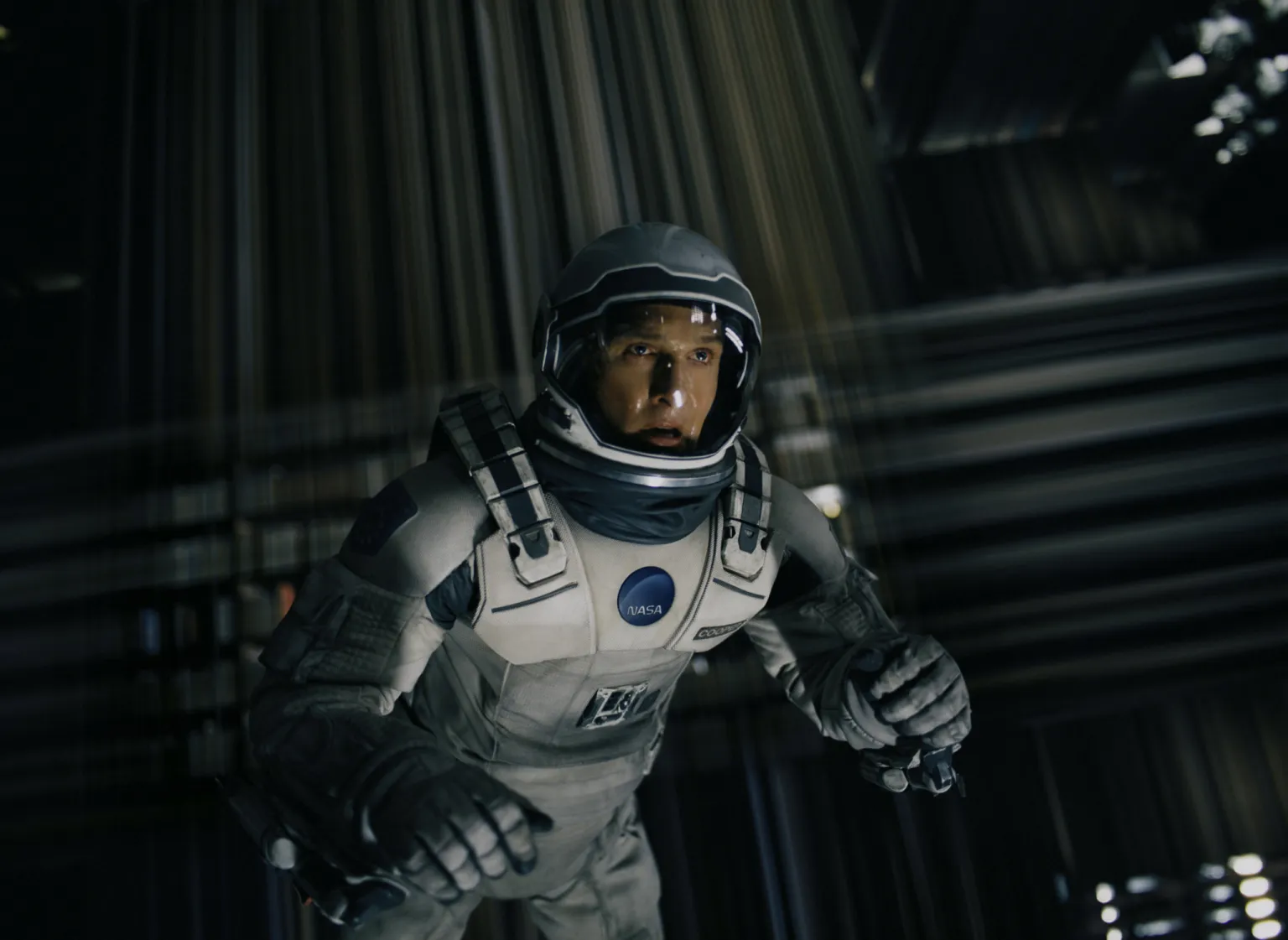
To ensure that the digital assets integrated seamlessly with the live-action plates, Nolan avoided the use of large-scale green screens. The visual effects team utilized high-powered digital projectors to project the pre-rendered caustics of the Tesseract directly onto the physical set walls during the shoot.
This practical integration allowed the IMAX cameras to capture real organic reflections on Matthew McConaughey’s helmet and space suit. By combining high-poly digital assets with physical optical illumination on set, the cinematography team managed to strip the CGI of its synthetic look, securing Interstellar’s position as a permanent masterpiece of pure, tangible scientific surrealism.
The ultimate triumph of Interstellar is that its complex digital models never serve as simple visual spectacle. Through its relativistic ray-tracing pipelines, custom rendering scripts, and absolute fidelity to theoretical physics equations, the production team transformed advanced software algorithms into a beautiful, clinical elegy for human survival among the stars.
Explore more technical breakdowns in our Effects & VFX section.