
The 1999 theatrical release of The Matrix, directed by Lana and Lilly Wachowski, fundamentally redefined the visual threshold of contemporary action and science fiction cinema. While the film’s dystopian narrative captured the cultural anxieties of the approaching millennium, its true legacy lies in its radical synthesis of digital technologies and traditional practical stunt work. Alongside visual effects supervisor John Gaeta, the Wachowskis systematically dismantled the conventions of Hollywood action filmmaking by pioneering complex photographic arrays and software rendering techniques. At the absolute apex of this aesthetic evolution is the iconic bullet-time sequence, an artistic achievement that managed to render physical space, temporal fluidity, and computational architecture as a unified cinematic reality.
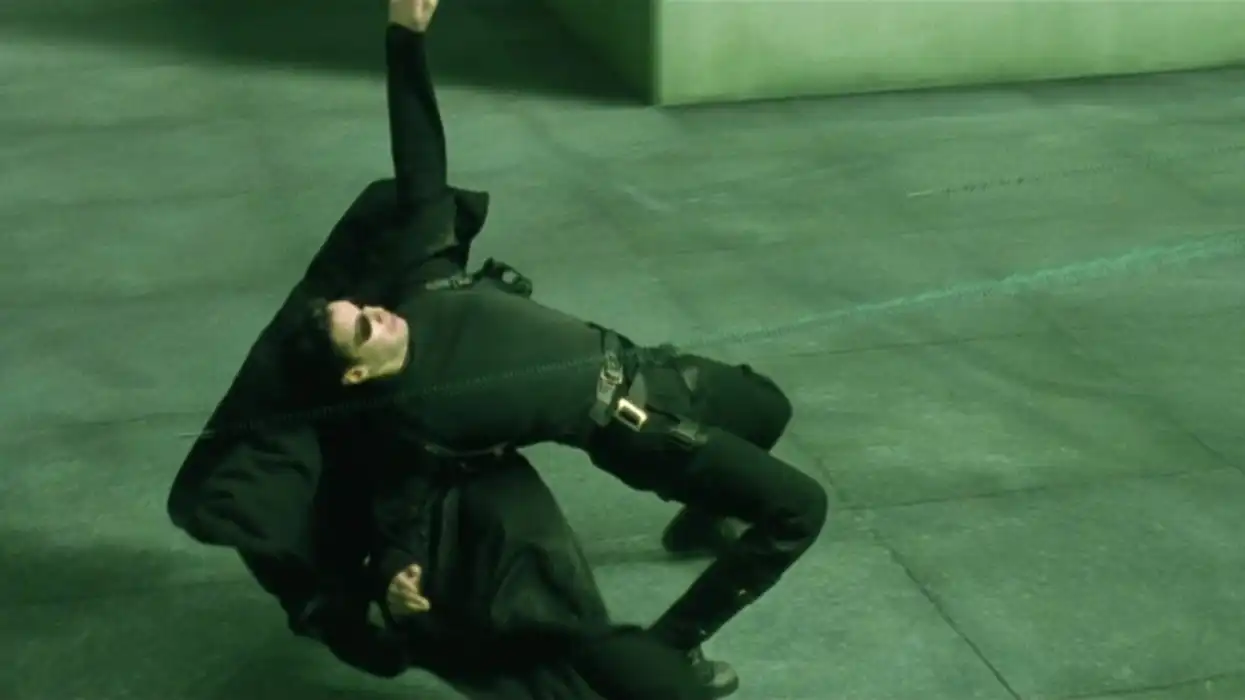
In this comprehensive technical breakdown, we examine how the visual effects team constructed the virtual architecture of the matrix, weaponized green-scale color grading, and achieved temporal manipulation to establish a milestone in digital storytelling.
1. The Mechanics of Bullet-Time and Photogrammetric Virtual Environments
The core visual breakthrough of the film was the development of bullet-time, a photographic technique that allows the camera to move at a normal operative speed while the physical subjects within the frame remain frozen or move in extreme slow motion. Rather than relying on singular camera setups or standard motion-control rigs, John Gaeta engineered a sophisticated circular array consisting of 120 specialized still cameras and two motion picture cameras placed on a custom-built green screen stage.
The layout allowed the production team to trigger cameras sequentially or simultaneously, effectively unlinking the camera’s spatial path from temporal constraints. To bridge the gaps between the physical photographs, the VFX team utilized early photogrammetric software to reconstruct the rooftop set as a three-dimensional virtual environment. The computer interpolated the spaces between the still exposures, generating a perfectly fluid, high-resolution simulation of a camera sweeping through an impossible perspective.
Spatial Simulation and the Illusion of Data
This systematic manipulation creates a jarring psychological experience for the viewer. Because the virtual camera moves smoothly around Neo as he evades supersonic ammunition, the cinematography emphasizes that the rules of gravity, velocity, and biology are entirely artificial constructs within the simulation. The hyper-sharp focus of the wide-angle exposures strips the scene of natural motion blur, reinforcing the clinical, mathematically simulated nature of the digital world.
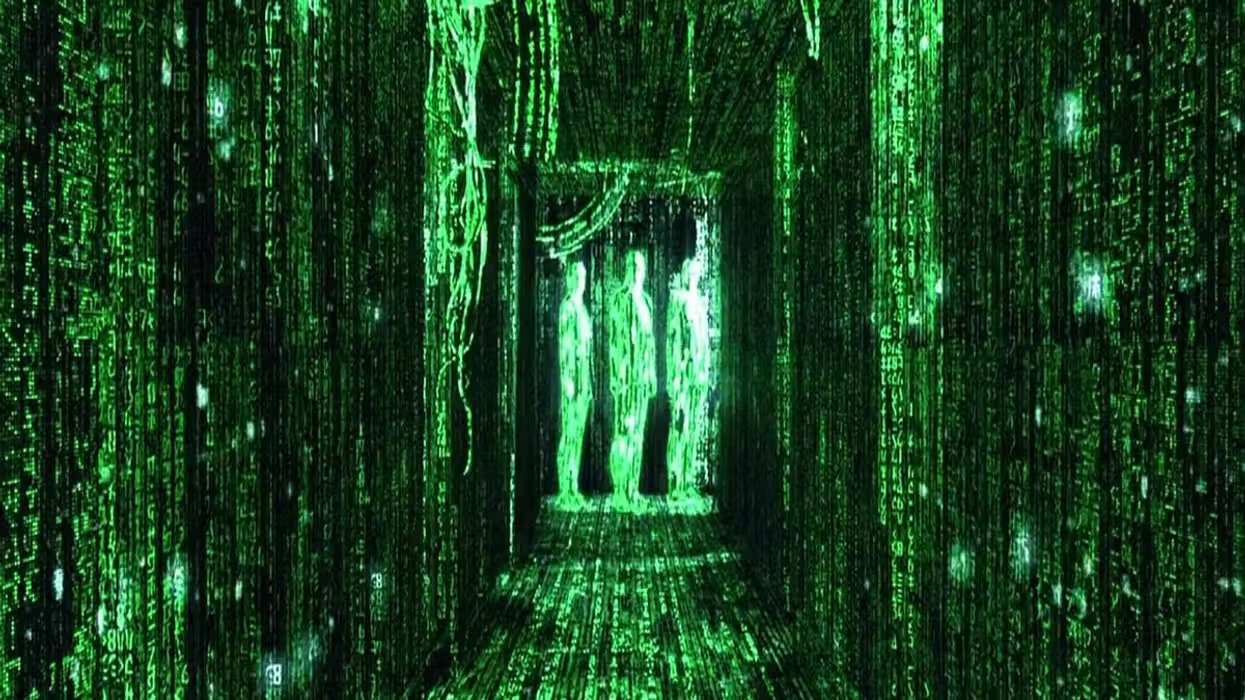
The resulting visual texture detaches the audience from standard cinematic immersion. Instead of observing a traditional stunt sequence, the viewer is forced to look at the action through an analytical aesthetic that transforms physical violence into a beautiful showcase of raw computational data processing.
2. Chromatic Distortion and Green-Scale Volumetric Grading
Complementing the spatial distortion of the camera arrays, the Wachowskis implemented a rigorous, absolute color grading strategy to differentiate the simulated world of the matrix from the grim reality of the Nebuchadnezzar. In close collaboration with cinematographer Bill Pope, the visual design required every single sequence set inside the computational environment to be systematically stripped of warm tones and overlaid with an intense green cast.
The Screen Phosphor Monochromatic Palette
The specific green hue was selected to evoke the monochrome phosphor monitors of early computer terminals, subtly suggesting to the viewer’s subconscious that every object within the frame is being generated by a computer processing unit. This look was achieved through a complex combination of on-set practical styling—including dying fabrics green, painting set walls with metallic green washes—and advanced digital color timers during post-production.
The volumetric green hue effectively neutralizes natural skin tones and organic textures, shifting the entire cinematic space toward a cold, sickly, and corporate atmosphere. By over-saturating the mid-tones and shadows with this green tint, the film strips the world of genuine sunlight and warmth, turning the familiar urban landscapes into an eerie, oppressive cage of code.

Biomechanical Digital Modeling and CGI Sentinels
In stark contrast to the sterile, green-washed simulation, the scenes set in the real world utilize a cold, industrial blue color temperature, highlighting raw metal, steam, and mechanical decay. To populate this nightmare landscape, the VFX team engineered some of the earliest complex biomechanical digital models in Hollywood history: the Sentinels.
These hunting machines required advanced procedural animation scripts to control the organic, snake-like movements of their multiple independent tentacles. By blending physical models with high-poly digital assets, the team created a gritty, tangible contrast to the smooth, clean perfection of the virtual reality. The abrupt shifts between the computational green simulation and the visceral, blue industrial reality secured The Matrix’s position as a masterpiece of pure structural, visual contrast.
The ultimate triumph of the film is that its special effects never serve as simple visual distraction. Through pioneering camera arrays, photogrammetric virtual sets, and an absolute commitment to a green digital color palette, the Wachowskis transformed advanced software into a perfect cinematic metaphor for human subjugation within a digital world.
Explore more technical breakdowns in our Effects & VFX section.
1 thought on “The Simulation of Space: Virtual Architecture and VFX in The Matrix (1999)”
Comments are closed.