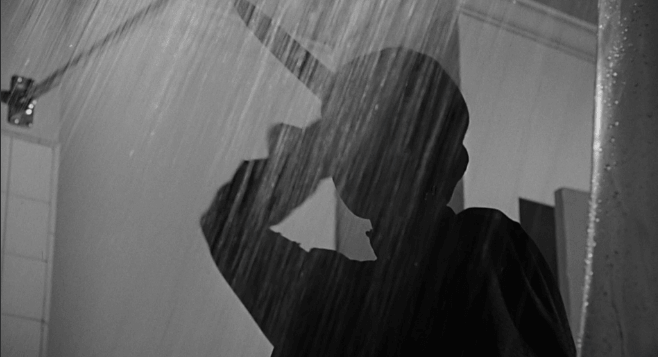
When Alfred Hitchcock released Psycho in 1960, he permanently altered the language of cinematic horror. Instead of relying on supernatural monsters or graphic gore, Hitchcock turned his attention toward psychological dread. At the center of this cinematic milestone is the legendary 45-second shower scene. More than just a murder sequence, it is a remarkable achievement in cinematography, framing, and visual editing that creates the impression of extreme violence without ever explicitly showing a knife piercing flesh.
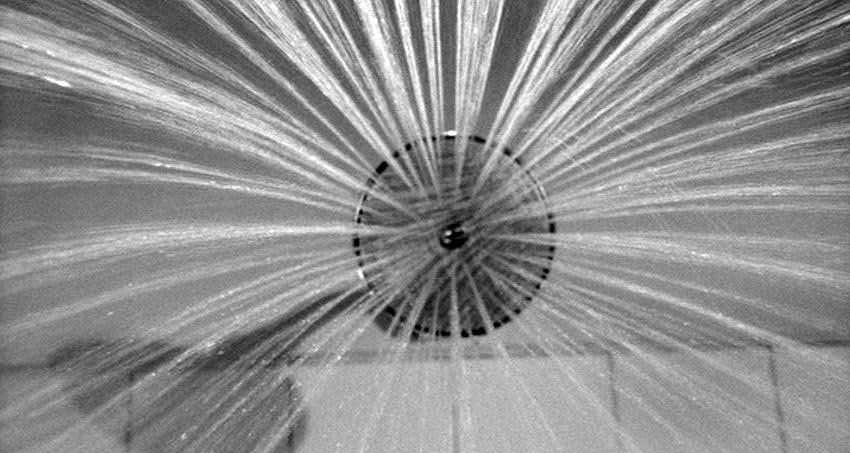
In this deep dive, we examine how Hitchcock and director of photography John L. Russell used visual storytelling techniques to redefine the way filmmakers could create fear on screen.
1. Spatial Fragmentation and Rapid Montage Editing
The most striking aspect of the shower scene is not simply what is shown, but how it is shown. Traditional filmmaking often relied on wider, uninterrupted shots to establish geography and action. Hitchcock broke away from this approach by using rapid montage to fragment the scene and control what the audience could see.
The sequence contains dozens of individual cuts compressed into roughly 45 seconds. By constantly shifting the viewer’s perspective, Hitchcock prevents us from maintaining a stable understanding of the space. We never see Marion Crane, the killer, and the bathroom interior together in a single, cohesive shot.
Disorientation Through Angles
The rapid transitions between close-ups of the knife, Marion’s terrified face, the shower water, and the drain create a fragmented visual experience. The viewer instinctively tries to reconstruct the action, but the editing deliberately provides only pieces of the event.
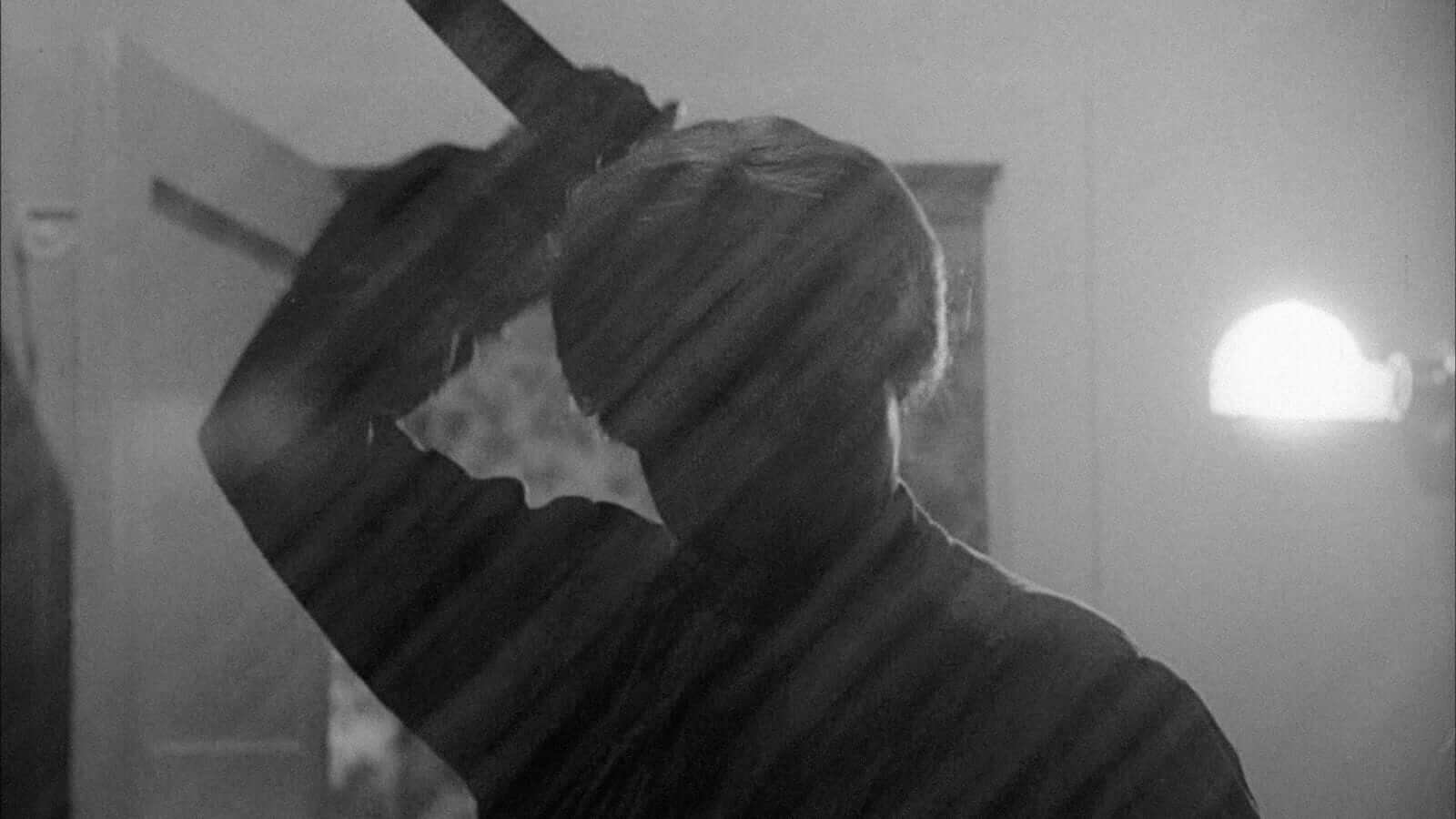
This fragmentation makes the attack feel faster and more chaotic than it actually is. Rather than allowing us to observe the murder from a safe distance, Hitchcock places us inside a series of brief, disconnected moments.
The Illusion of Violence
One of the scene’s most remarkable techniques is that the knife never actually appears to penetrate Marion’s body. The impression of violence is created through editing, camera angles, sound, and carefully choreographed movements.
When the knife moves toward Marion, the film cuts away before the moment of impact. The sequence then cuts between the knife, Marion’s body, the shower curtain, running water, and blood. The audience’s mind connects these separate images and creates a continuous act of violence that the camera never directly shows.
This is a crucial part of Hitchcock’s technique: what the audience imagines can be more disturbing than what the camera explicitly reveals.
Pacing as a Psychological Tool
The rhythm of the editing also plays an important role. The cuts become increasingly rapid as the attack unfolds, creating a sense of panic and confusion. Brief moments of stillness allow the audience to register what has happened before the sequence moves forward again.
The editing therefore does more than show the murder. It reproduces something of the victim’s experience: sudden shock, confusion, and escalating fear.
2. Lighting and Chiaroscuro: The Abstraction of Monochrome
Working within a strict black-and-white palette, Russell used strong contrasts between light and shadow to transform an ordinary bathroom into an unsettling visual environment. The result recalls elements of German Expressionism, where lighting and composition were often used to externalize psychological states.
High-Key Sterility vs. Deep Shadows
At the beginning of the scene, the bathroom appears bright, clean, and almost clinical. The white tiles, porcelain fixtures, and shower curtain create an environment associated with cleanliness and safety.
Once the attack begins, however, the same space takes on a completely different character. Strong contrasts and dark areas make the bathroom feel less secure, even though its physical appearance has barely changed.
This transformation is important because Hitchcock does not need to introduce a completely different location to create fear. Instead, he changes the way the existing space is perceived.
The Silhouette of the Killer
The killer’s appearance behind the translucent shower curtain is one of the scene’s most recognizable images. Rather than immediately showing a detailed face or identity, Hitchcock reduces the figure to a dark, threatening silhouette.
This visual choice turns the killer into an unknown presence. The audience can recognize the basic shape of a person, but cannot clearly identify who is behind the curtain. The uncertainty makes the figure more threatening.
The curtain therefore becomes more than a physical object. It acts as a visual barrier between the audience and the source of the danger.
Textural Contrast
The contrast between the bright bathroom tiles, the dark silhouette, and the constantly moving water gives the scene a distinctive visual texture. The monochrome photography also allows small changes in brightness and shadow to become particularly noticeable.
The absence of color removes a layer of visual information and places greater emphasis on shape, contrast, movement, and composition. Instead of making the scene visually less expressive, black-and-white photography gives Hitchcock and Russell another way to control the audience’s attention.
The result is a scene in which an ordinary bathroom becomes visually threatening through nothing more than editing, lighting, framing, and movement.