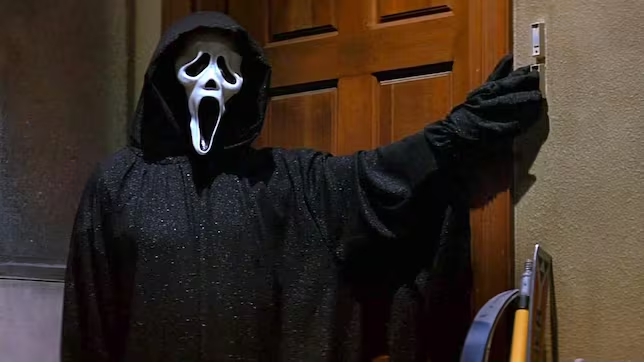
Constructing a continuous sense of psychological violation within a suburban domestic environment requires absolute precision over frame geometry, off-screen acoustic space, and subversive spatial staging. In Scream (1996), director Wes Craven abandoned traditional slasher tropes to establish an integrated optical-to-narrative staging blueprint that traps characters inside familiar, brightly lit domestic layouts that suddenly mutate into inescapable kill-boxes. Rather than relying on supernatural concealment, the direction utilizes the internal partitions, sliding glass doors, and hallways of suburban homes to create a suffocating visual trap. This calculated methodology forces spatial geography to destabilize the physical blocking of the actors frame-by-frame, successfully establishing a heavy, tangible sense of stalking paranoia directly on the cinematic lens sensor.
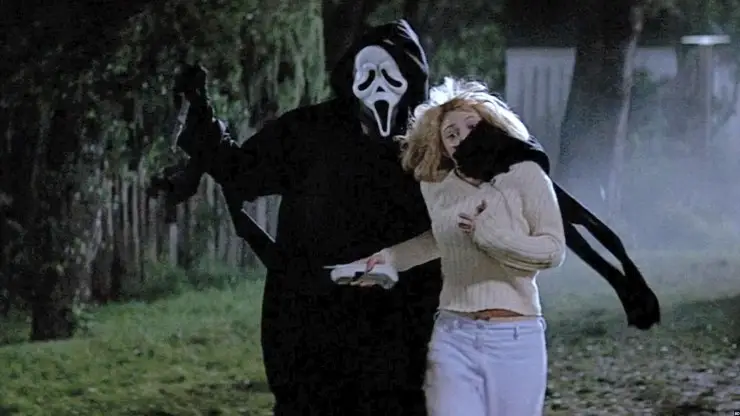
In this technical directorial analysis, we deconstruct the mechanical lens choices that weaponize domestic thresholds, analyze the editing cadence variables that dictate suspense, examine the blocking architecture used to subvert audience expectation, and dissect the tracking matrices that balance subjective POV shots with objective spatial geometry.
1. Lens Metrics and the Weaponization of Suburban Domestic Space
The primary narrative tension within the film’s iconic opening sequence and subsequent home invasions stems from the deliberate deployment of medium-to-wide focal lengths combined with deep staging, which keeps background entry points dangerously active. While conventional horror blockbusters traditionally rely on extreme darkness and shadow concealment to generate frights, Craven and cinematographer Mark Irwin illuminated the interiors to expose the vulnerability of the characters against large, glass-paneled boundaries. This absolute commitment to spatial transparency directly mirrors the psychological tension layouts we examined in our The Conjuring (2013) visual effects breakdown, proving that definitive genre cinema achieves psychological weight only when the camera geometry strips the characters of their perceived safe zones.
Mechanical Blocking and Frame Division
This optical exposure demanded a highly rigorous approach to horizontal and vertical actor blocking across doorframes and kitchen islands. The direction organizes the action across intersecting planes within the frame, forcing the performers to pivot against transparent windows that expose them to unseen external stalkers. The camera tracks these frantic movements using fluid steadicam passes that lock the audience into the same helpless observation angle as the killer, ensuring that every sudden intrusion or threshold breach maintains a direct, visceral impact on the screen composition.
2. Narrative Pacing Metrics and the Subversion of Point-of-View
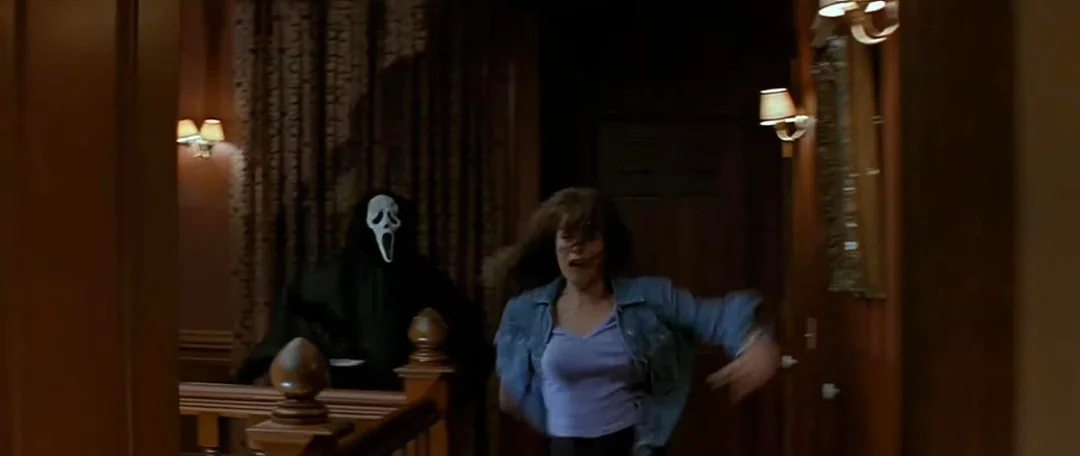
The sequence depicting the systematic isolation of victims required a radical synchronization between subjective point-of-view (POV) framing and objective wide coverage. Standard slasher structures lean heavily on erratic, fast-cut editing to simulate panic—a technique that frequently disorients spatial logic. Craven maintained long, uninterrupted tracking movements where the camera adopts the killer’s voyeuristic gaze before violently shifting to trap the victim within tight corners. The editing pipeline calculated the exact duration of these push-ins to match the erratic shifts in telephone dialogue and sudden audio stingers, turning acoustic rhythm into a visual editing guide.
Directorial Architecture and Threshold Vulnerability
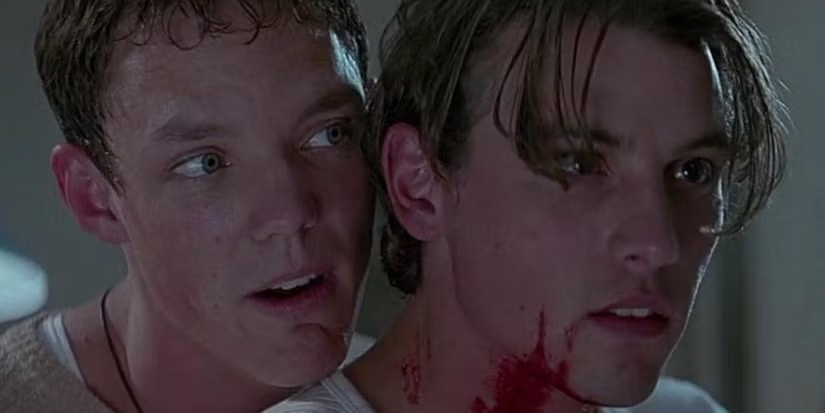
Managing the progressive violation of the suburban safehouse demanded a complex multi-stage spatial choreography plan. The production design teams utilized open-plan kitchens, sliding glass patio doors, and long corridors to maximize line-of-sight exposure. The direction treats these architectural elements not as background decoration, but as active narrative hazards that dictate how lines are delivered and how lenses track the action. Consequently, as the houses become crime scenes under the killer’s psychological progression, the structural layouts limit the characters’ available escape vectors, creating a brilliant, clinical exploration of domestic terror where every single frame occupies space with absolute physical accountability.
Deconstructing this shifting domestic canvas demonstrates that modern horror masterpieces achieve absolute visual authority when directorial precision overrides generic genre tropes. Through the calculated deployment of transparent optical fields, synchronized POV tracking, and highly restricted actor blocking matrices, the production team successfully converted complex spatial vulnerability into a permanent masterclass for contemporary thriller cinema.
Explore more technical breakdowns in our Direction & Narrative section.