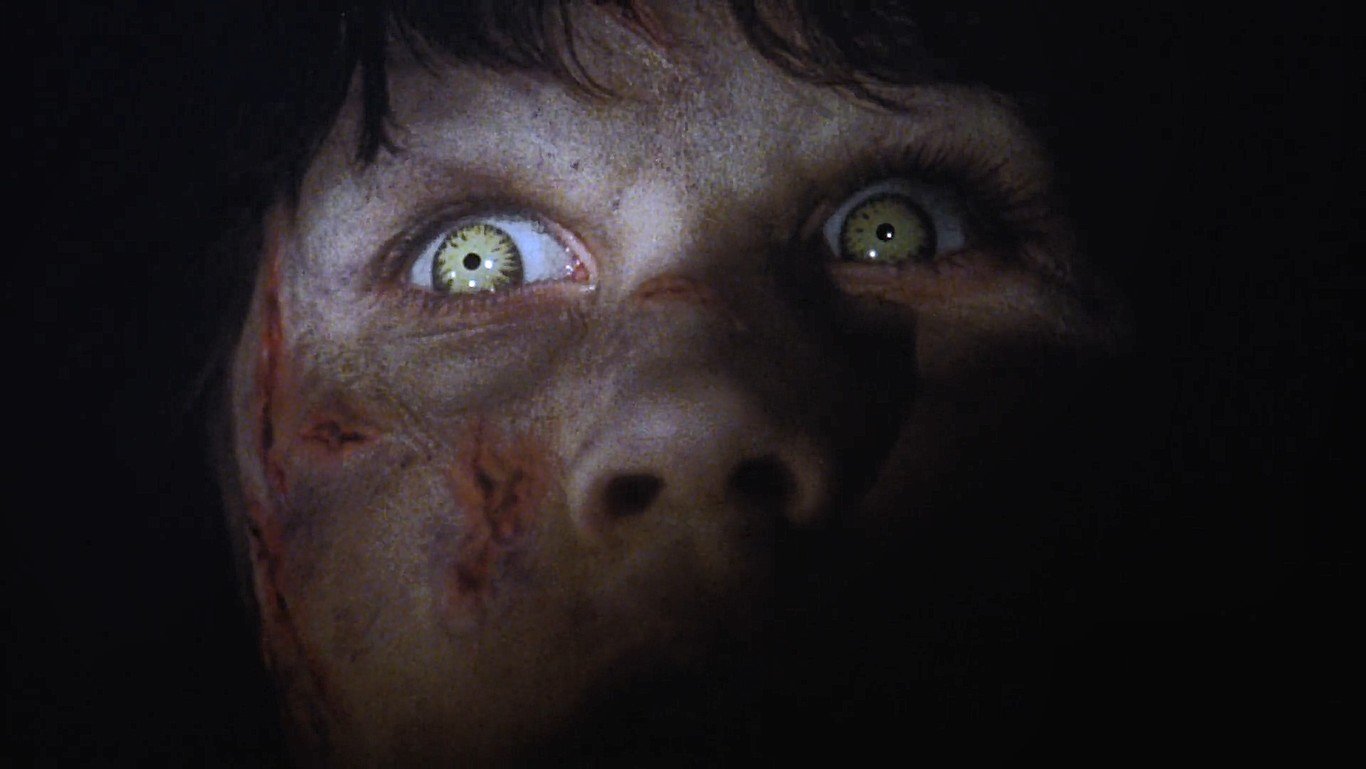
The visual grammar of William Friedkin’s The Exorcist (1973) stands as a monumental landmark achievement in psychological horror, completely rejecting the stylized, expressive gothic lighting conventional to the genre in favor of a cold, clinical realism. Cinematographer Owen Roizman engineered a documentary-style cinematic framework that intentionally grounded the supernatural events within a tangible, authentic, and mundane suburban reality. Shot on 35 mm film using fast spherical lenses, the production serves as a clinical masterclass in underexposed color palettes, localized high-contrast shadows, and practical environmental manipulation. Through these techniques, Roizman and Friedkin ensured that the film’s terrifying descent feels physically immediate, compositionally restrictive, and structurally uncompromising for the spectator.
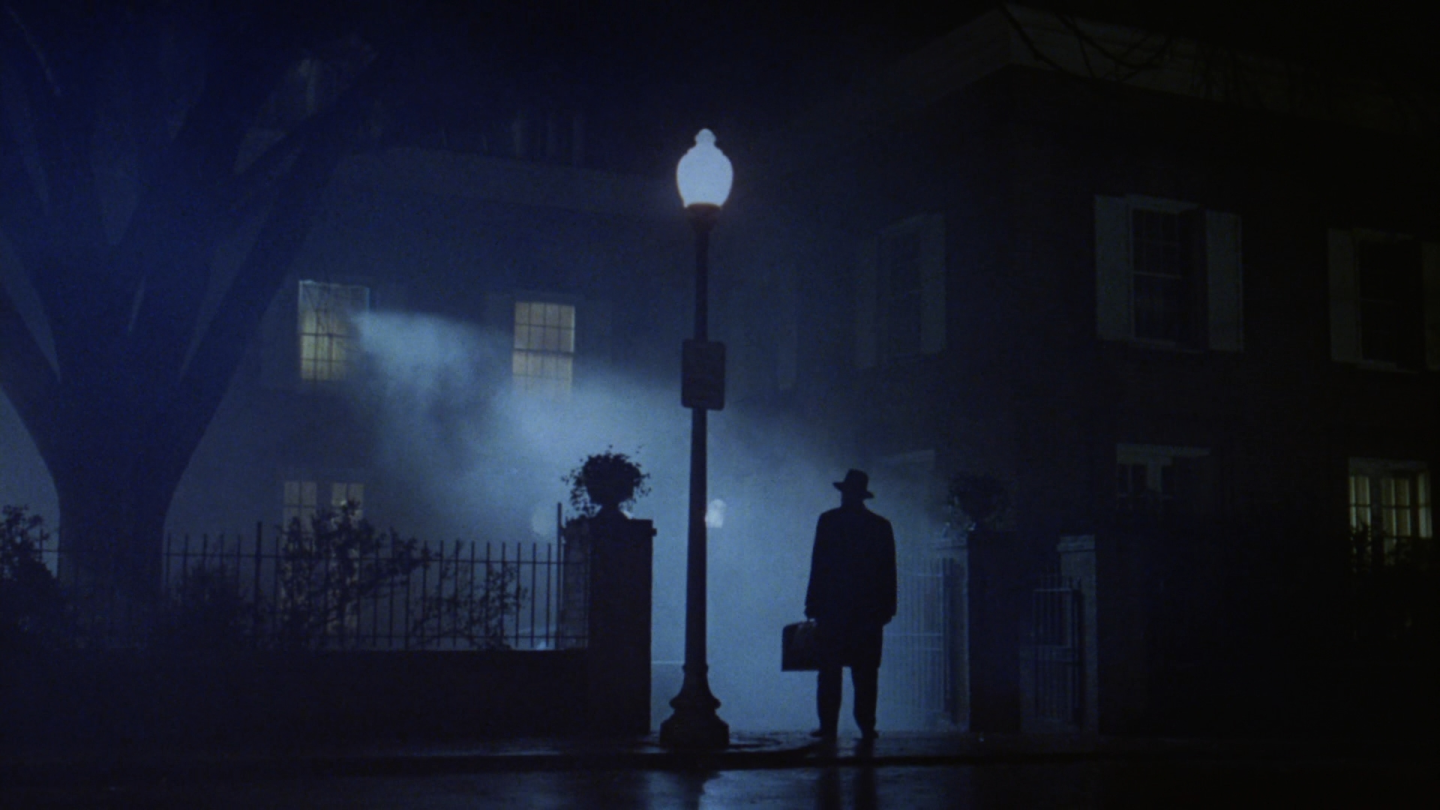
Documentary Realism and the Desaturation of Suburban Spaces
The structural efficacy of the narrative relies entirely on the stark contrast between ordinary human life and absolute theological terror. Roizman captured the Georgetown sequences utilizing standard spherical optics, prioritizing Panavision Ultra Speed lenses that avoided the non-linear horizontal distortions, anamorphic streaks, or organic lens flares inherent to widescreen anamorphic setups. By maintaining strict geometric linearity across the horizontal axis, the camera frames the family home with a domestic, unmanipulated simplicity that mirrors photojournalism. The color space is deliberately suppressed throughout the first act, relying on desaturated earth tones, muted greys, and cold interior blues that drain the domestic spaces of psychological warmth long before any explicit paranormal intervention occurs on screen.
To illuminate the interior rooms during the first half of the film, the technical crew utilized diffused incandescent lighting arrays designed to precisely simulate standard household lamps and real architectural illumination vectors. Roizman actively avoided traditional Hollywood glamour fill lights, allowing characters to move naturally into pockets of deep, naturalistic shadow within the household environments. This absolute commitment to physical accuracy establishes a heavy, photographic weight on screen. The cinematography consistently prioritizes flat, objective reality over dramatic cinematic artifice, forcing the spectator into a state of vulnerable proximity where the supernatural elements cannot be easily dismissed as mere theatrical illusion or stylized fantasy.
The Spatial Oppression of the Bedroom Set
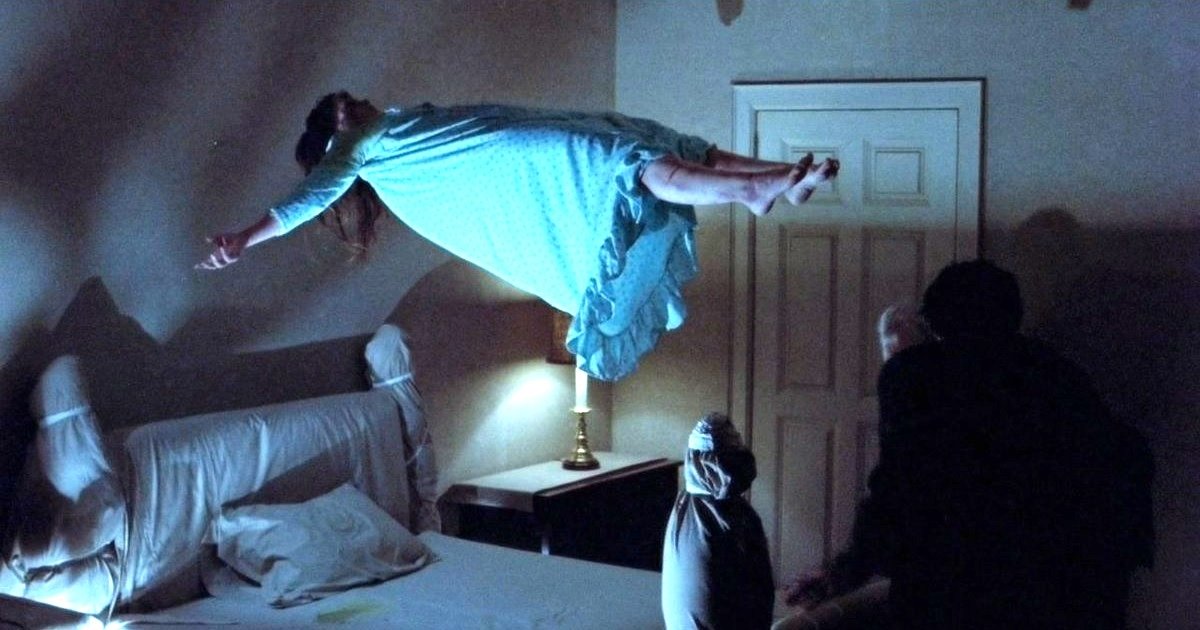
As the entity tightens its psychological and physical grip on the young subject, the spatial mechanics of the bedroom transform through calculated framing adjustments and strategic lens switches. The wide, objective angles used early in the film to depict family interactions gradually dissolve into tight, restrictive focal lenses that compress the depth of field and isolate the characters against the cold, unyielding boundaries of the walls.
The camera blocking inside the room becomes intentionally rigid, claustrophobic, and confrontational. By locking the camera down on heavy camera mounts and executing precise, incredibly slow dollies, the cinematography emphasizes the absolute immobility and helplessness of the human observers against an unseen, immovable force. The tight architectural boundaries of the room function as an oppressive, claustrophobic cage where every frame lines up perfectly with the psychological deterioration and loss of control experienced by the protagonists.
Thermal Manipulation and the Deconstruction of Volumetric Space
The artistic and technical peak of the production occurs during the climatic exorcism rituals, where the visual processing shifts into an environment defined by extreme thermal control and absolute atmospheric hostility. To visually capture the supernatural freezing of the bedroom without relying on primitive digital optical effects or post-production overlays, Friedkin and Roizman took the radical step of building the bedroom set inside a fully functional, refrigerated cocoon stage.
The Physics of Condensed Breath and Hard Key Lighting
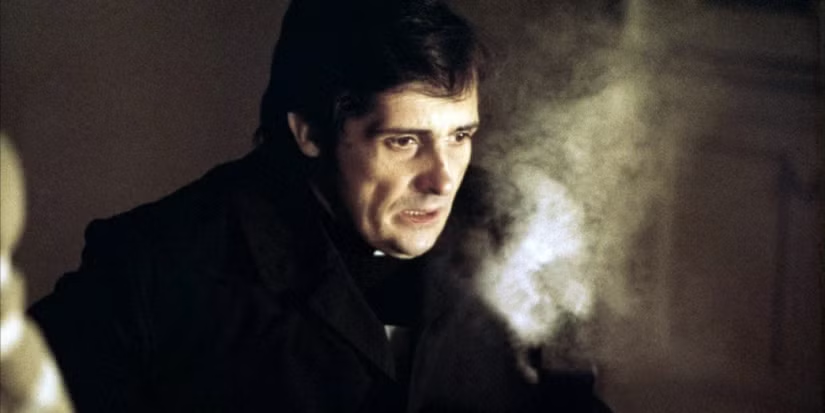
The technical crew chilled the air down to sub-zero temperatures using massive industrial air conditioning units, causing the actors’ physical breath to instantly condense upon exhalation. To make this volumetric vapor visible to the film stock without washing out the dark, detailed background textures of the wallpaper, Roizman completely overhauled the entire illumination setup on location. The team utilized single-source, high-intensity backlights positioned at precise oblique angles behind the performers to catch and illuminate the micro-droplets of moisture hanging in the air.
This hard, highly directed light cuts through the darkness, rendering the frozen breath as a thick, swirling physical entity on screen that visualizes the demonic corruption. The camera tracks these close-ups with a clinical intensity, capturing the fine textures of frosted skin, sweat, and biological fluids under shifting hard light fields. This rigorous adherence to physical light boundaries and real environmental mechanics establishes a deep, organic sense of visual dread, proving that true cinematic terror on celluloid is achieved through absolute devotion to physical light limits and uncompromising tangible set staging.
The Cold Palette of the Spiritual Climax
During the final ritualistic battle, the cinematography undergoes a final, cold pivot in color temperature management and tone control. The warm incandescent lamps are completely extinguished within the narrative space, replaced by a harsh, monochrome-adjacent color space dominated by ice-blues, raw magnesium whites, and deep, absolute blacks. To simulate an unyielding, unearthly chill, Roizman deployed uncorrected overhead fixtures that flattened the warm skin tones of the priests into pale, slate-grey fields.
The primary color spectrum is completely banished from the room throughout this final sequence, reserving high-saturation elements exclusively for the raw medical wounds and metabolic fluids that map the physical toll of the battle. This complete suppression of visual warmth leaves the screen feeling cold, clinical, and spiritually exhausted, cementing the film’s status as an enduring masterpiece of uncompromising visual realism that relies strictly on the physical parameters of photographic emulsions and hard light craft.
Explore more technical breakdowns in our Cinematography section.
1 thought on “Sub-Zero Thermal Environments and Fast Spherical Glass: How Owen Roizman Grounded The Exorcist (1973)”
Comments are closed.