
When Curry Barker released Obsession in 2026, he delivered a masterclass in psychological tension, permanently altering the grammar of the contemporary domestic thriller. Rather than relying on external plot twists or melodramatic outbursts, Barker focuses his directorial vision on the quiet, devastating spaces between actions. At the center of this narrative milestone is the sequence in the modernist villa. More than just a simple confrontation between characters, it is a remarkable achievement in directorial pacing, subtextual blocking, and narrative structure that exposes the rot beneath a pristine, high-class marriage.
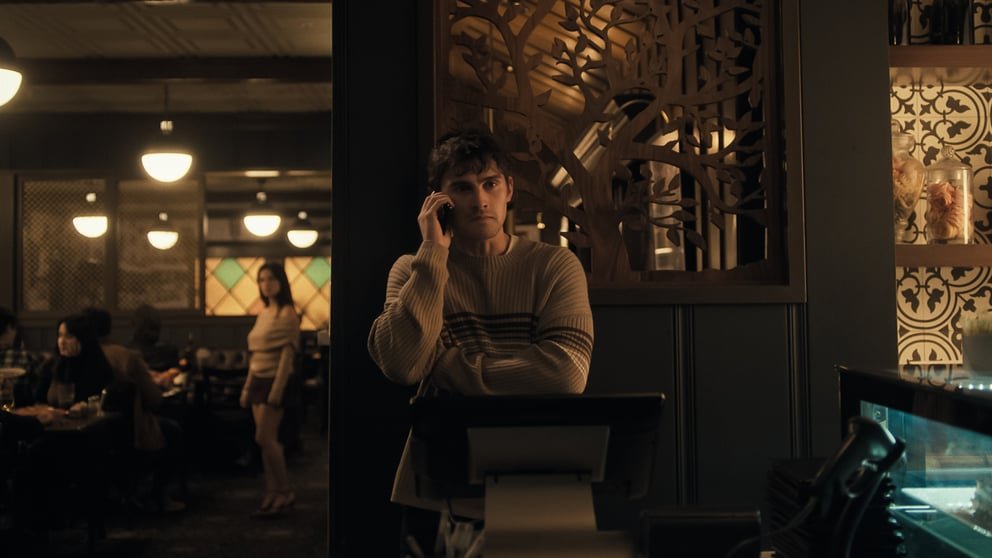
In this deep dive, we examine how Barker utilizes subtext, micro-actions, and structural pacing to redefine the way modern filmmakers can construct psychological dread entirely through directorial choices.
1. Directorial Blocking as a Map of Power Dynamics
The most striking aspect of the villa sequence is not the dialogue itself, but how Barker orchestrates the physical relationship between the characters. Traditional narrative delivery relies on cutting back and forth between speakers to capture immediate reactions. Barker breaks away from this convention, using rigid, intentional character blocking to visualize the shifting power dynamics within the marriage long before a word is spoken.
Throughout the scene, the characters rarely occupy the same horizontal plane. Barker deliberately positions one character standing in an elevated, dominant position while the other remains seated, physically trapped by the low-slung modernist furniture. By manipulating their physical proximity, the direction establishes an invisible wall between them, turning a shared domestic space into a deeply divided psychological war zone.
The Narrative Subtext of Movement
Every movement within the villa is heavy with narrative consequence. A character simply walking across the kitchen to pour a glass of water is directed with a mechanical, cold precision that signals emotional detachment. The slow, calculated adjustments in body language and orientation communicate what the screenplay leaves unsaid: the complete breakdown of trust.
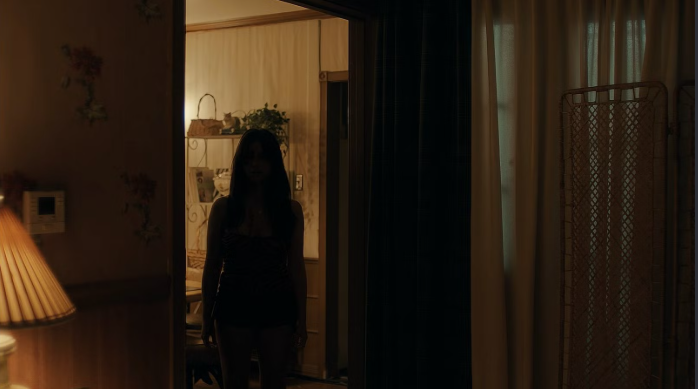
This meticulous blocking makes the vast, open-plan villa feel incredibly suffocating. Rather than letting the camera move organically, Barker directs his actors to move like chess pieces, emphasizing that every interaction in this relationship is calculated, performative, and deeply strained.
The Illusion of Truth
One of the scene’s most brilliant narrative techniques is the constant tension between the spoken words and the visual reality. The dialogue appears calm, polite, and almost mundane on the surface, but the direction weaponizes this politeness. Barker highlights micro-expressions—a tightened jaw, a delayed blink, or a hand gripping a marble countertop—to contradict the spoken text.
By forcing the audience to look past the literal dialogue, the narrative structure creates a profound sense of irony. We are not just watching a conversation; we are witnessing the carefully curated public image of a marriage actively fracturing in private. Barker masterfully builds a dual narrative: the polite facade the characters present to each other, and the terrifying psychological truth they are desperately trying to hide.
Pacing and Temporal Discomfort
The pacing of the scene serves as Barker’s primary psychological tool. He avoids the rapid, comforting rhythm of standard Hollywood editing, choosing instead to let long pauses hang heavily in the air. These moments of silence are not dead space; they are narrative voids where the unspoken tension grows thick and unbearable for the audience.
The directorial rhythm therefore does more than tell a story. It actively subjects the viewer to the exact same emotional claustrophobia experienced by the characters, slowing down time to maximize the discomfort of the realization.
2. Structural Adaptation: The Architecture of Moral Decay
Barker uses the physical environment not merely as a background, but as an active participant in the story. In his narrative architecture, the transparent glass walls and pristine surfaces of the villa do not represent honesty or clarity; instead, they are weaponized to expose the complete vulnerability and eventual exposure of the characters’ secrets.
Transparency vs. Concealment
At the beginning of the sequence, the villa’s design suggests absolute control, success, and transparency. The massive glass panes reveal a perfect exterior world, aligning with the narrative archetype of a modern, elite lifestyle that has nothing to hide.
As the psychological confrontation deepens, however, this transparency becomes a narrative trap. The open layout ensures that the characters have nowhere to retreat for privacy. Every emotional breakdown is visible from every angle of the house, stripping away their defenses and transforming their luxurious sanctuary into a fishbowl of judgment and exposure.
This narrative shift is crucial because Barker does not need to plunge his characters into a dark, gothic basement to generate fear. Instead, he constructs horror out of total exposure, proving that being completely seen can be far more terrifying than being left in the dark.
The Distortion of Identity

The choice to frame the climax of the conversation through a double-paned window is a fundamental narrative decision. By showing a character looking at their spouse while simultaneously facing their own ghosted reflection, Barker visually anchors the film’s central theme: the deep internal split between who we are and the obsession we chase.
This visual duality acts as a narrative mirror. The character is forced to confront both the reality of their decaying marriage and the monstrous nature of their own fixations. It marks the precise structural pivot point of the film, where denial is no longer a viable option.
The glass environment therefore transcends its physical function. It serves as a literal narrative barrier, illustrating the tragic distance between the characters’ public personas and the dark, hidden obsessions driving their actions.
The final result is a brilliantly executed sequence where an elite, modern home becomes a site of psychological dread, achieved entirely through masterful directorial blocking, thematic use of space, subtextual dialogue, and relentless narrative pacing.
Explore more deep dives in our Direction & Narrative section.