The structural architecture of Quentin Tarantino’s Kill Bill: Vol. 2 (2004) represents a radical, calculating departure from the kinetic pastiche that governed its predecessor. Within the broader narrative framework of contemporary American independent cinema, the production functions as a sophisticated exercise in non-linear chronotope management, conversational tension loops, and severe atmospheric decompression. Rather than relying on high-frequency montage or continuous physical spectacle to drive the timeline forward, the directorial execution shifts entirely toward a heavy, text-driven reality. Through strict control over dialogue delivery intervals and claustrophobic spatial framing, the narrative converts empty desert landscapes into oppressive, character-driven pressure chambers.
Non-Linear Chronotope Matrices and the Mechanics of Delayed Resolution
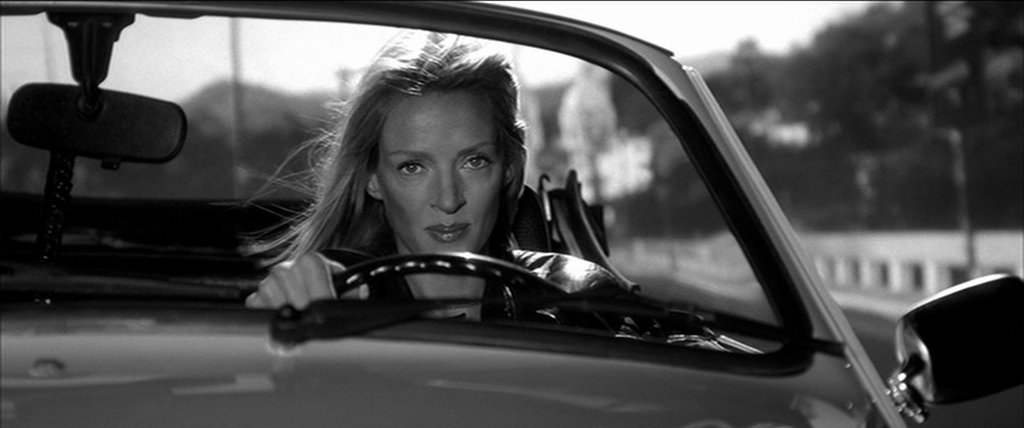
The defining structural property of the film’s narrative trajectory relies on the manipulation of temporary structural displacements. Tarantino breaks away from traditional classical Hollywood three-act timelines by deploying an expansive series of narrative blocks that shift across temporal axes. The film initiates not with a fluid continuation of the Tokyo conflict, but with a stark, black-and-white retrospective analysis of the foundational trauma at the El Paso chapel. This deliberate structural choice alters the spectator’s perception of cause and effect, transforming an external revenge arc into a cold, internal exploration of inevitable historical confrontation.
This calculated temporal mechanics directly mirrors the expressive visual controls required to capture physical light transitions, an intrinsic technical alignment we explored within our comprehensive Kill Bill Vol 1 cinematography analysis, demonstrating that whether a narrative segment organizes its power through complex anamorphic lens fields or fragmented timeline displacements, cinematic authority demands absolute structural discipline. By systematically withholding information through prolonged conversational sequences—such as the extended, tense confrontation between Budd and Bill on the isolated desert trailer set—the direction establishes a heavy structural latency. The narrative pacing deliberately decelerates, forcing the viewer to calculate the underlying psychological stakes before any kinetic force is unleashed on screen.
The Spatial Isolation of the American Desert
The framing throughout the desert chapters relies heavily on wide-angle low-horizon compositions balanced against vast, dead vanishing points. Tarantino breaks away from urban kinetic pacing by using the barren topography of the Mojave desert as an active narrative suppressor. The characters are frequently positioned at the extreme lower thirds of the widescreen frame, swallowed by massive, empty sky volumes that emphasize their physical and moral isolation.
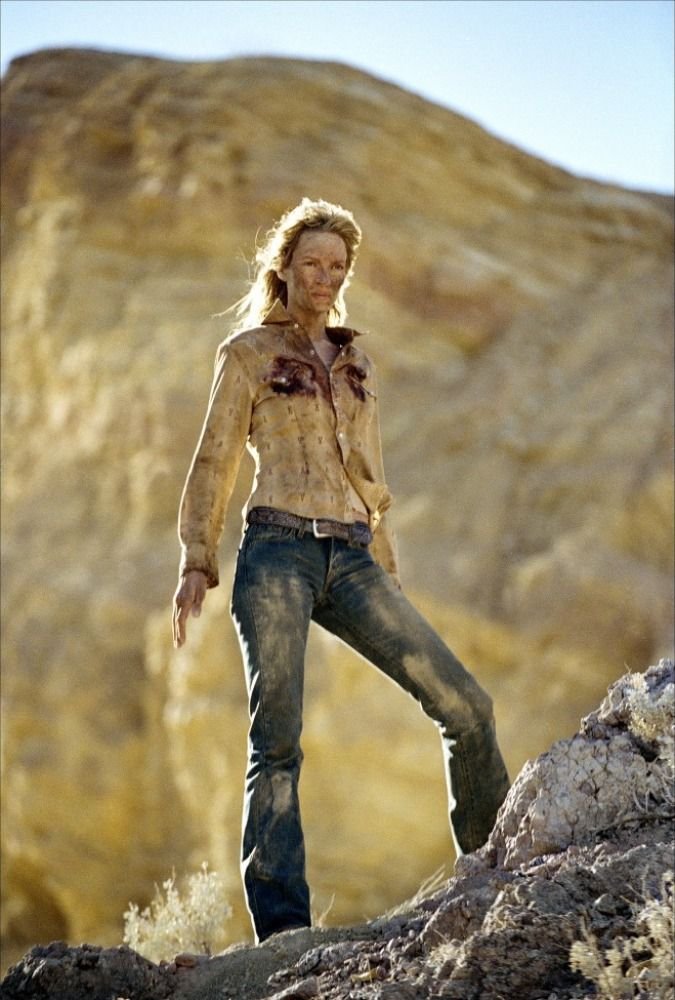
The camera movements remain slow, heavy, and deliberate, prioritizing long tracking shots and static, unyielding takes. By maintaining this strict visual weight, the direction ensures that space itself feels heavy and absolute. The environment ceases to be a passive background, transforming into a clinical, high-contrast arena where characters are caught within an inescapable machinery of historical accountability.
Conversational Tension Loops and the Auditory Framework of Claustrophobia
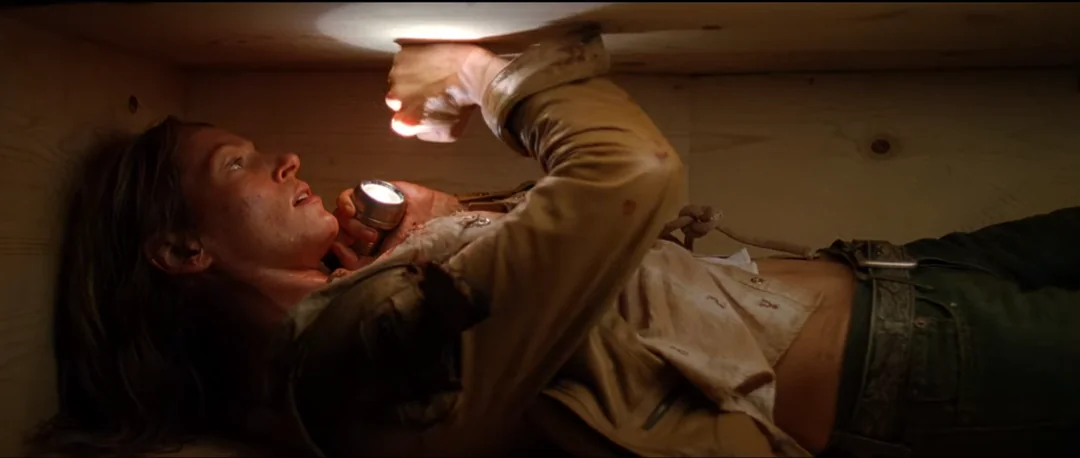
The technical peak of the film’s narrative execution centers on the visceral deconstruction of the burial sequence in Chapter Seven. Rather than formatting the scene as a standard survival thriller sequence, the directorial choice treats the event as a pure sensory deprivation experiment, utilizing extreme close-ups, absolute darkness blocks, and a dense, isolated auditory soundscape to physicalize the psychological horror of live burial.
The Auditory Geometry of Spatial Deprivation
To successfully execute this sequence without traditional spatial reference keys, the direction strips away all background environmental sound fields, focusing exclusively on micro-specular auditory cues. The sound matrix records the abrasive friction of nails scraping against raw pine wood, the heavy, rhythmic panic of respiration inside an enclosed volume, and the low-frequency thud of heavy desert soil falling onto the top of the wooden box structure.
This tight sensory containment forces absolute dramatic focus onto the performer’s physical constraints. The camera remains fixed in the absolute darkness, utilizing only the micro-flashes of a flashlight beam to slice the frame in half, uncovering the fine texture maps of the raw wood grain and sweat-streaked skin geometry. This heavy contrast transforms the sequence from a simple suspense mechanism into a profound exploration of human endurance under extreme physical limitation, proving that narrative tension peaks when the spatial matrix is compressed to its absolute physical minimum.
The Dialogue Subtext of Dramatic Liquidation
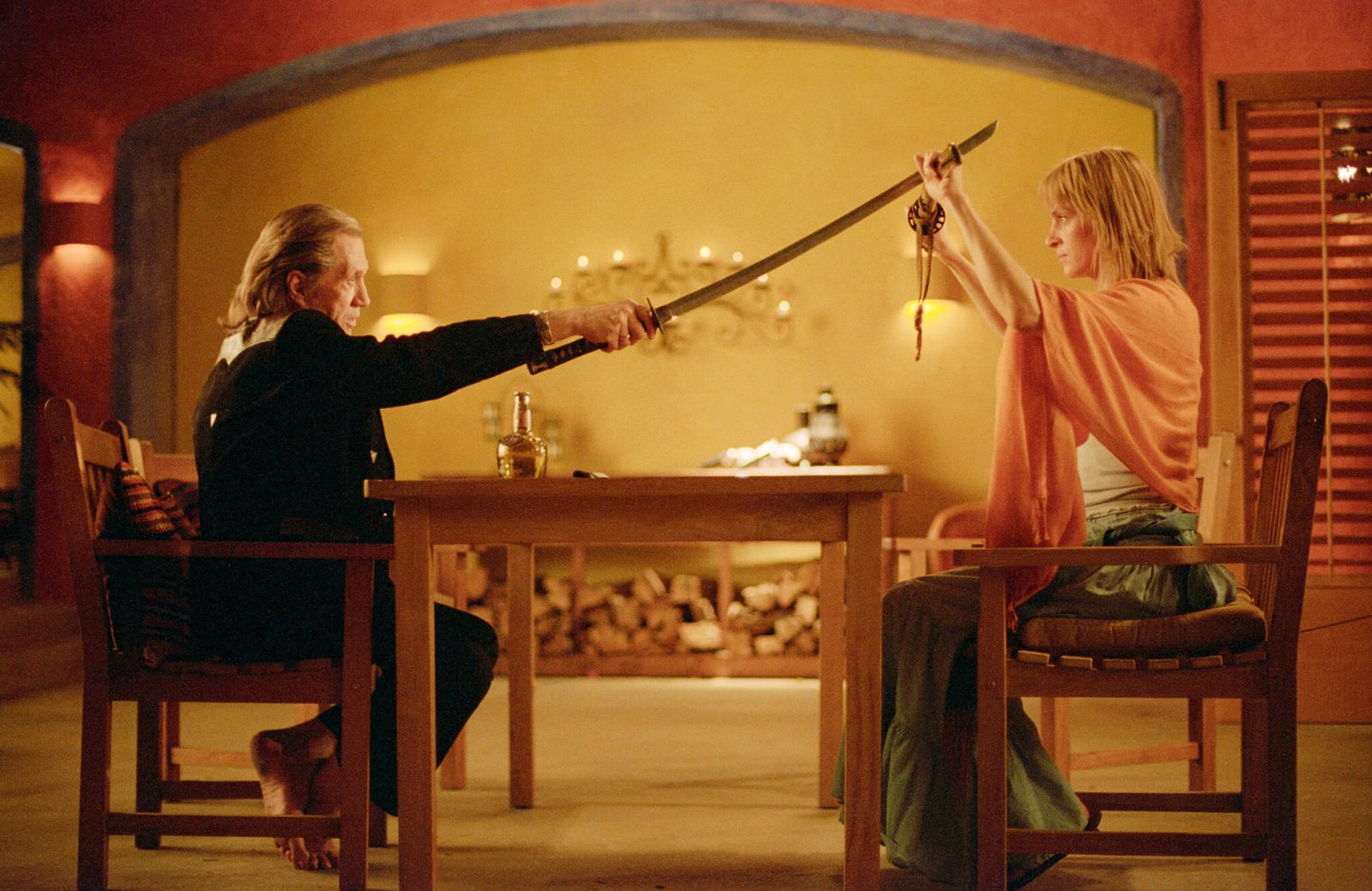
The final confrontation between Beatrix and Bill transitions away from raw martial arts violence toward a protracted, highly philosophical conversational loop. To execute this narrative liquidation, Tarantino relies on long-form close-up matrices that track the subtle micro-expressions of the performers with mathematical precision. The dialogue—notably the famous analytical monologue regarding the mythological archetype of Superman—functions as a psychological tool to dismantle the characters’ strategic masks before the final physical resolution occurs.
The camera remains completely static throughout this exchange, avoiding any kinetic shifts. By maintaining this steady, clinical visual stance, the direction underscores the absolute, inescapable finality of the encounter. When the final physical technique is executed, it occurs not as an explosive action beat, but as a quiet, calculated mathematical resolution to years of structural tension, cementing the production as a masterpiece of contemporary independent narrative structure.
Explore more technical breakdowns in our Direction & Narrative section.
1 thought on “Nonlinear Structures: Directorial Pacing in Kill Bill Vol 2 (2004)”
Comments are closed.