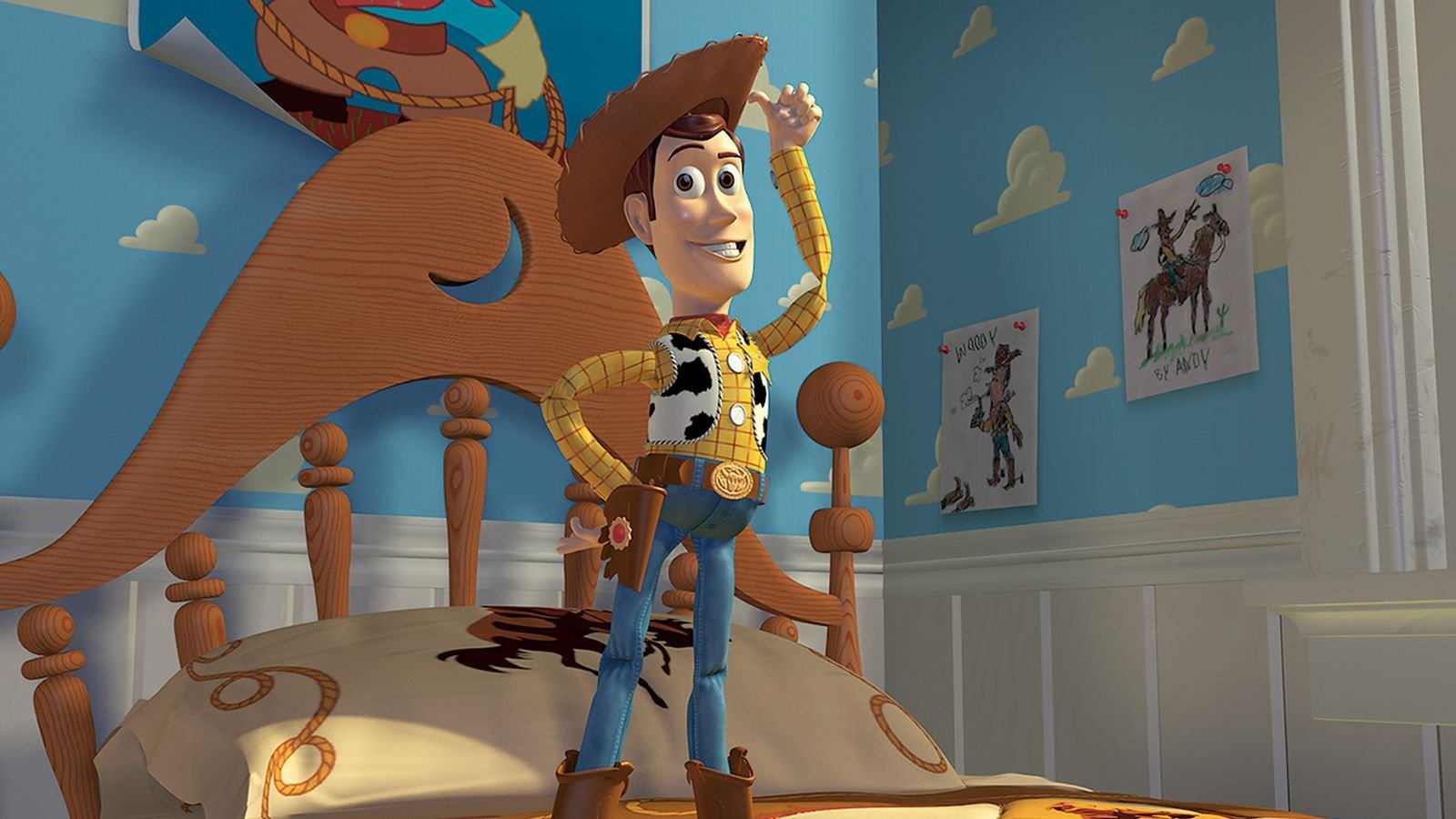
The historical baseline separating physical creature engineering from computational image synthesis was definitively shattered with the release of Pixar’s Toy Story in 1995. As the first feature-length cinematic production generated entirely within a three-dimensional digital space, the project represented less of an artistic evolution and more of a rigorous software engineering milestone. The visual authority of the film does not emerge from traditional optical photography or chemical film processing, but from complex mathematical algorithms, multi-layered shader pipelines, and strict computational geometry constraints. This algorithmic approach transformed abstract topological meshes into a heavy, tactile, and visually coherent reality, establishing the definitive blueprint for modern computer-generated asset pipelines.
The RenderMan Architecture: Shading Matrices and Ray-Tracing Limits
The computational engine driving the entirety of the production environment was Pixar’s proprietary RenderMan shading language software infrastructure. Operating on custom Silicon Graphics workstations, the technical directors were tasked with converting mathematical coordinate data into millions of individual rasterized color pixels. Unlike modern real-time graphics pipelines that utilize high-speed hardware shortcuts, the RenderMan engine calculated the physical behavior of light interacting with geometric objects through localized software shading matrices.
Every digital asset—from the metallic reflectivity of a mechanical visor to the organic specular bounce of a plastic surface—was governed by custom procedural shaders written in explicit C-like programming languages. These surface algorithms computed lighting equations at the micro-pixel level, accounting for directional light vectors, ambient light fields, and diffuse surface scattering. The massive technological challenge of 1995 resided in the lack of global illumination algorithms. Because the hardware lacked the processing capacity to execute true ray-traced ambient bounce lighting in real time, technical artists had to hardcode hundreds of individual shadow-casting spot lights to simulate realistic atmospheric depth, forcing a highly clinical approach to spatial illumination management.
The Topological Mathematics of Variable Kinematics
To physicalize the movements of the synthetic actors across the digital sets, the software engineering team developed complex algorithmic deformation matrices. Each character model was treated as a collection of multi-layered control vertices linked to a underlying digital skeletal structure.
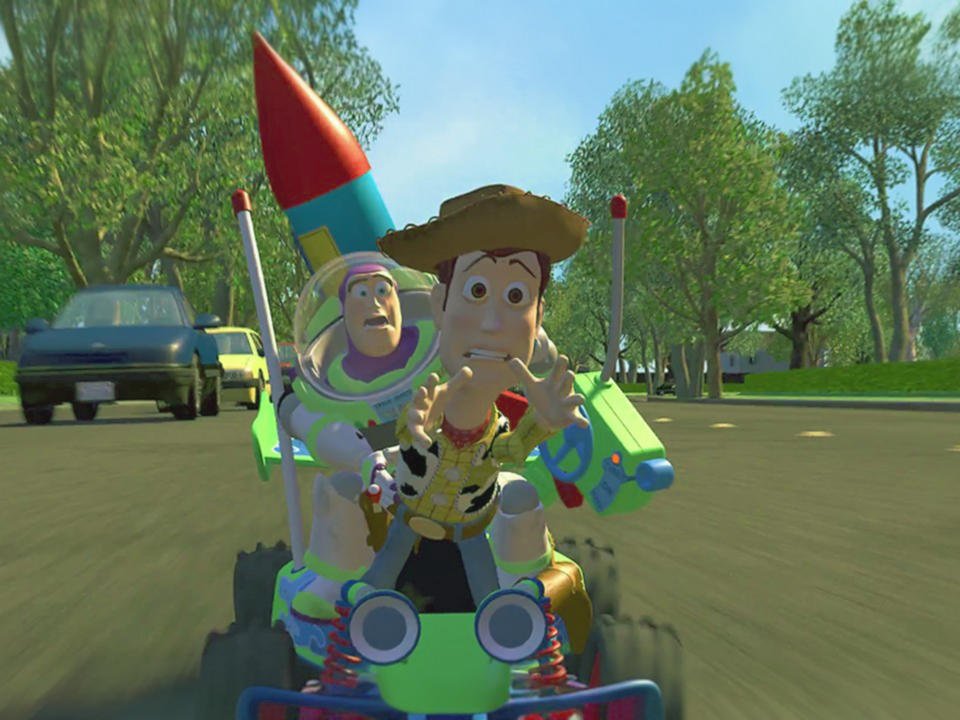
By implementing advanced forward and inverse kinematics algorithms, animators programmed complex motion trajectories through variable spline interpolation lines. The software calculated the velocity and acceleration vectors of the meshes across three-dimensional axes, preventing the digital geometry from collapsing or tearing during rapid physical sequences. This rigorous engineering control over synthetic kinetic momentum directly contrasts with the heavy multi-axial mechanical rigging required to move physical assets in the ocean, a structural challenge we explored in depth within our Jaws practical effects breakdown, proving that whether a predator is constructed of steel pistons or mathematical matrices, visual authority demands absolute adherence to physical gravity and spatial weight.
Texture Mapping and the Eradication of Digital Plasticity
The critical visual threshold that separated Toy Story from early experimental computer graphics was the implementation of sophisticated texture mapping and procedural noise filtering. Early 3D rendering suffered from a stark flaw known as absolute digital plasticity—where surfaces appeared perfectly smooth, sterile, and visually synthetic. To anchor the film in an optically undeniable reality, the technical direction team had to systematically introduce micro-imperfections into the digital asset files.
Procedural Scratches and Micro-Specular Variance
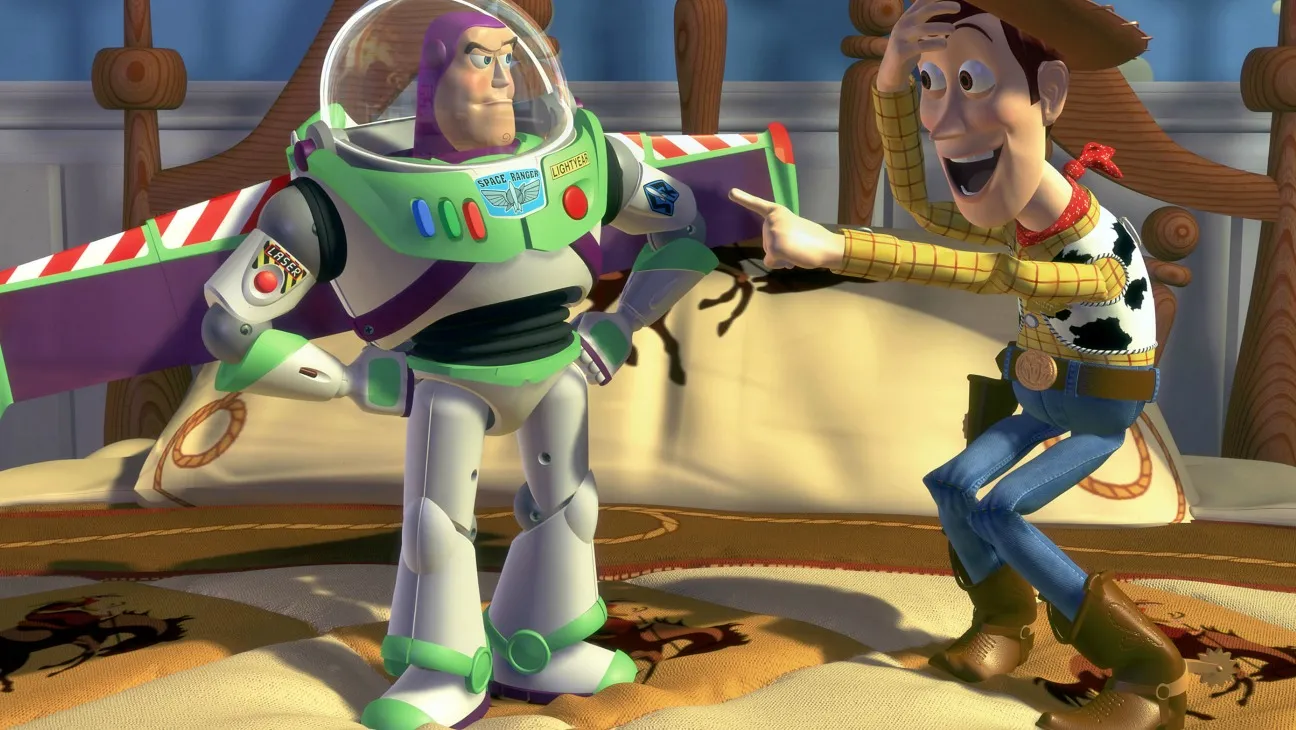
To break the artificial perfection of the digital models, software engineers applied multi-layered texture maps containing custom bump-mapping data and specular opacity controls. For characters like Buzz Lightyear, the surface maps were intentionally injected with digital scuffs, microscopic scratches, and uneven plastic mold lines. This procedural variation altered the light reflection across the object’s geometry, preventing the specular highlight from shining uniformly.
The camera tracked these close-ups with tight, high-contrast framing paradigms, catching how the virtual lighting fields broke against the distressed surfaces. This meticulous attention to superficial wear transformed the synthetic characters from flat geometric shapes into tactile, weathered objects that carried historical presence on screen, satisfying the strict sensory requirements of contemporary cinematic presentation without relying on a single millimeter of physical photographic film stock.

Data Pipeline Management and Render Farm Latency
The final processing hurdle of the production cycle focused on data throughput and compilation architecture. The computational requirements to output a single 115,200-pixel resolution frame averaged between 45 minutes and 30 hours, depending on the geometric complexity and shadow depth of the scene. To compile the entire film, Pixar assembled a custom render farm composed of 117 centralized SPARCstation workstations operating continuously across localized network grids.
This data pipeline required strict code optimization to prevent memory overflows and server core failures. Digital assets had to be dynamically loaded and unloaded from volatile memory caches based on the camera’s active field of view. The resulting computing framework demonstrated that feature-length digital cinematography was entirely viable, marking the absolute death of flat cell animation and birthing a new era of computational visual storytelling that remains the foundational infrastructure of modern Hollywood spectacle.
Explore more technical breakdowns in our Effects & VFX section.