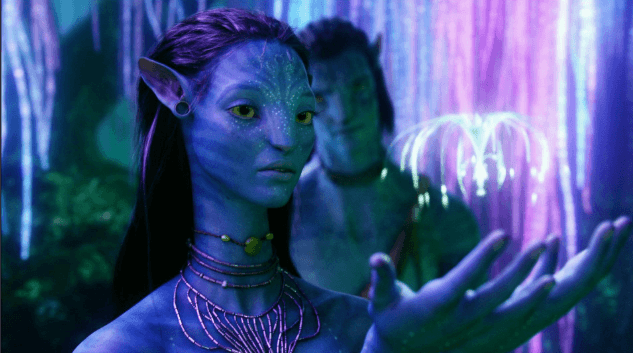
When James Cameron released Avatar in 2009, he did not merely deploy an advanced science fiction narrative; he fundamentally re-engineered the classical grammar of contemporary cinematography. The production represents a historical paradigm shift where the traditional boundaries separating physical camera direction, stereoscopic optical mechanics, and real-time digital asset integration completely dissolved. At the absolute core of this technological milestone is the conceptualization of virtual cinematography—a programmatic pipeline where the camera lens is no longer restricted by physical space, mechanical rigging, or atmospheric interference, but is instead governed by complex spatial matrices and real-time data capture interfaces.
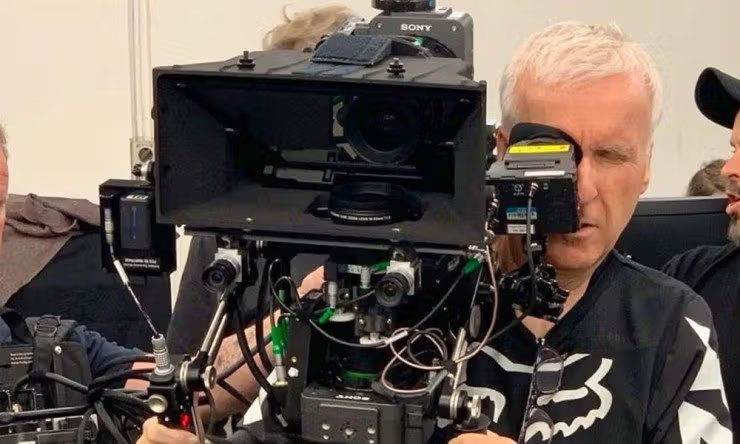
In this technical cinematographic analysis, we deconstruct the optical mechanics of stereoscopic beam-splitter Fusion rigging, dissect the implementation of real-time virtual camera telemetry loops, and examine how computational illumination pipelines establish visual continuity across synthetic assets.
The Fusion Camera System: Stereoscopic Beam-Splitter Rigging and Optical Convergence
The physical components of Avatar were captured utilizing the Fusion Camera System, co-developed by James Cameron and cinematographer Vince Pace. Rather than treating stereoscopic 3D as a post-production conversion artifact, the production pipeline utilized true dual-lens setups to acquire discrete left-eye and right-eye visual channels simultaneously. The mechanical rigging architecture utilized custom beam-splitter configurations where two Sony HDC-F950 high-definition cameras were mounted in a synchronized intraocular matrix. This setup allowed the camera operators to dynamically adjust both interaxial distance (the physical separation between the two optical centers) and convergence angles (the inward tilt of the lenses to establish the stereoscopic plane of focus) in real time while tracking live action on the set.
This active control over stereoscopic convergence completely revolutionized the spatial mathematics of framing. Traditional cinematography relies exclusively on depth of field, anamorphic distortion, and focal length selection to guide the spectator’s eye across a flattened two-dimensional canvas. In the stereoscopic pipeline of Avatar, depth became an active narrative variable governed by optical convergence matrices. By mathematically aligning the optical axes of the dual lenses at the exact coordinates of the primary subject, the production team localized the stereoscopic zero-parallax plane directly on the characters. This precise geometric calibration eliminated the subconscious optical fatigue and visual divergence typical of early stereoscopic projections, ensuring that the spatial depth map seamlessly complemented the physical blocking of the actors.
The Virtual Camera Pipeline: Real-Time Performance Capture and Spatial Telemetry
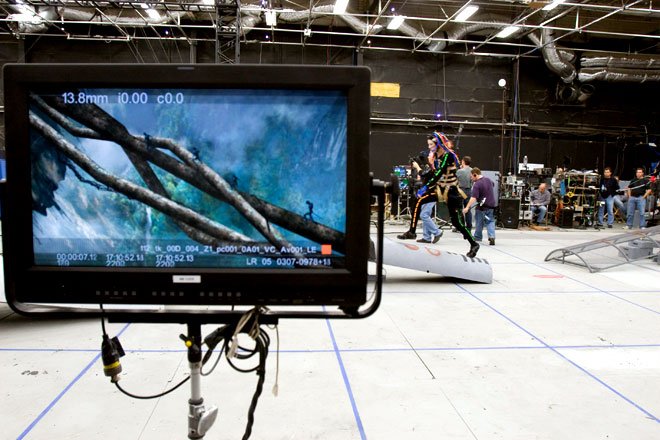
The true conceptual breakthrough of the project resides in the development of the Virtual Camera (or “Director’s Slate”), a device that decoupled the act of cinematography from traditional physical optics. Operating inside an expansive motion-capture environment known as “The Volume,” the virtual camera system operated on a network of near-infrared tracking arrays that mapped the physical position and orientation of the director’s handheld monitor in real time. The slate itself contained no optical glass or chemical sensors; instead, it functioned as an interactive telemetry interface embedded with retroreflective markers that constantly beamed spatial coordinates back to a centralized rendering server pipeline running custom motion-tracking software.
As James Cameron physicalized camera movements inside the empty volume stage, the tracking backend calculated his exact coordinates within a three-dimensional virtual environment, rendering low-resolution digital environments and performance-capture characters into his handheld monitor with only a single frame of latency. This real-time visualization pipeline allowed the director to execute complex camera techniques—such as dramatic handheld pans, low-angle tracking dollies, and rapid crane simulations—directly within a fully synthesized digital ecosystem. The cinematography was no longer bound by the mechanical constraints of heavy camera cranes or physical set boundaries. The lens could glide through dense virtual foliage, pass through non-solid digital geometries, and track high-speed computational assets with mathematical precision, preserving the intuitive, organic imperfection of human-operated camera work within an entirely synthetic space.
Simulcam Architecture: Real-Time Integration of Physical and Virtual Assets
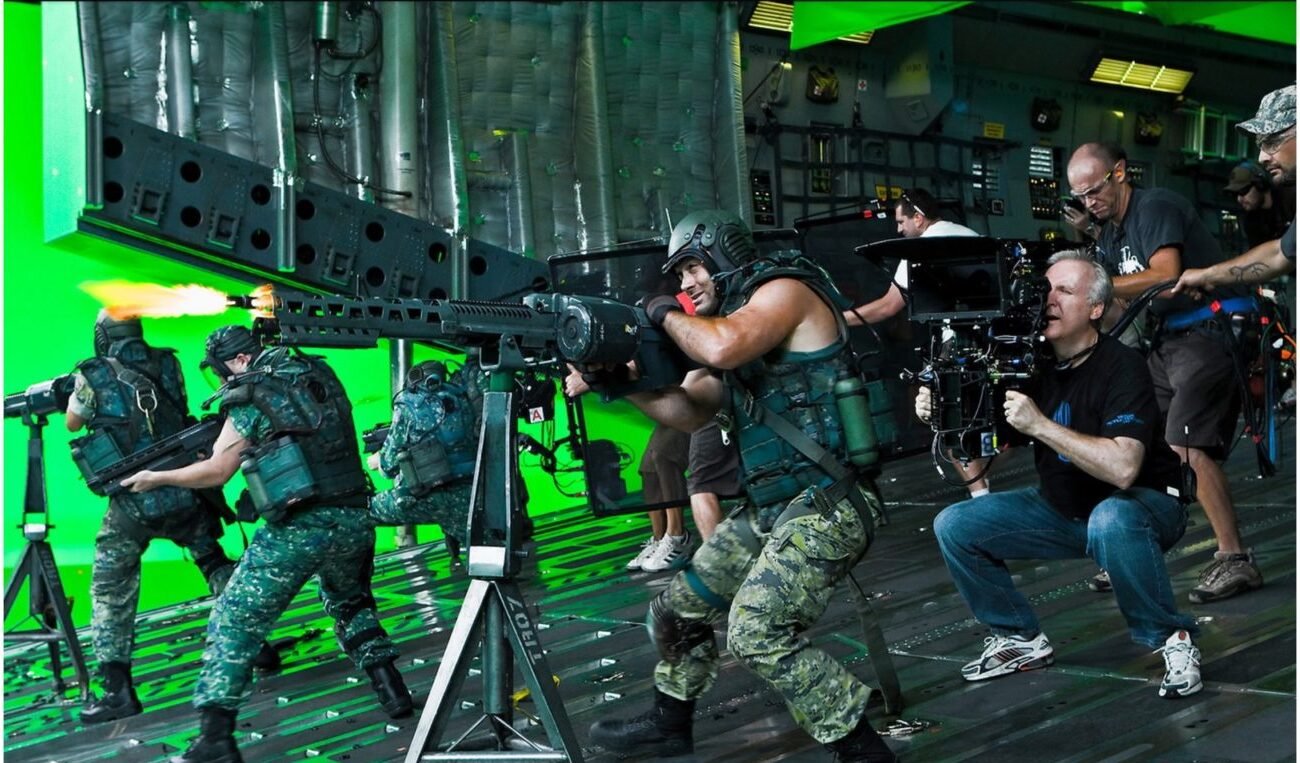
To connect the live-action physical sets with the fully digital layers of Pandora, the production team engineered the Simulcam pipeline. This system essentially integrated the virtual camera telemetry networks with a physical camera rig operating on a live-action stage. When capturing physical actors inside real set pieces, the Simulcam tracked the live camera’s position, focal length, and zoom metrics via specialized lens encoders and spatial tracking arrays. The real-time graphics processor then overlaid the pre-rendered digital elements—such as giant alien structures, digital backgrounds, and computer-generated characters—directly onto the physical camera viewfinder.
This real-time optical compositing fundamentally altered the directorial feedback loop. Cinematographers and camera operators were no longer forced to execute complex tracking compositions against blank green screens based on abstract guesswork. The Simulcam allowed the physical camera operator to compose frames with absolute spatial accountability, matching the pan, tilt, and zoom acceleration of the live lens with the virtual assets in perfect real-time synchronization. The resulting lighting and framing coherence established a genuine aesthetic link between the real world and the computational layers, creating a seamless visual continuity where physical light and synthetic assets shared a unified spatial grid.
Computational Illumination: Image-Based Lighting and Digital Subdermal Scattering
The final layer of visual cohesion in the cinematography of Avatar was achieved through advanced computational illumination pipelines designed to mimic the behavior of physical light interacting with real matter. To light the synthetic characters, the production team utilized extensive image-based lighting matrices derived from high-dynamic-range (HDR) captures of the physical sets. This ensured that the color temperature, specular reflection fields, and ambient bounce light of the digital environment perfectly matched the illumination values of the live-action elements.
Furthermore, the digital skin shaders implemented sophisticated subdermal scattering algorithms to accurately render the luminescence of Pandoran biology. When virtual light hit the digital skin matrices of the Na’vi, the software calculated the depth of light penetration, sub-surface blood flow absorption, and internal light refraction before outputting the final pixel value. This programmatic control over specular micro-geometries and volumetric diffusion allowed the virtual cinematography to escape the flat, artificial aesthetic of early digital character rendering, anchoring the entire visual presentation in a cold, visceral, and optically authentic reality.
Explore more technical breakdowns in our Cinematography section.
2 thoughts on “Virtual Cinematography: Optical Matrices and Core Pipelines in Avatar (2009)”
Comments are closed.