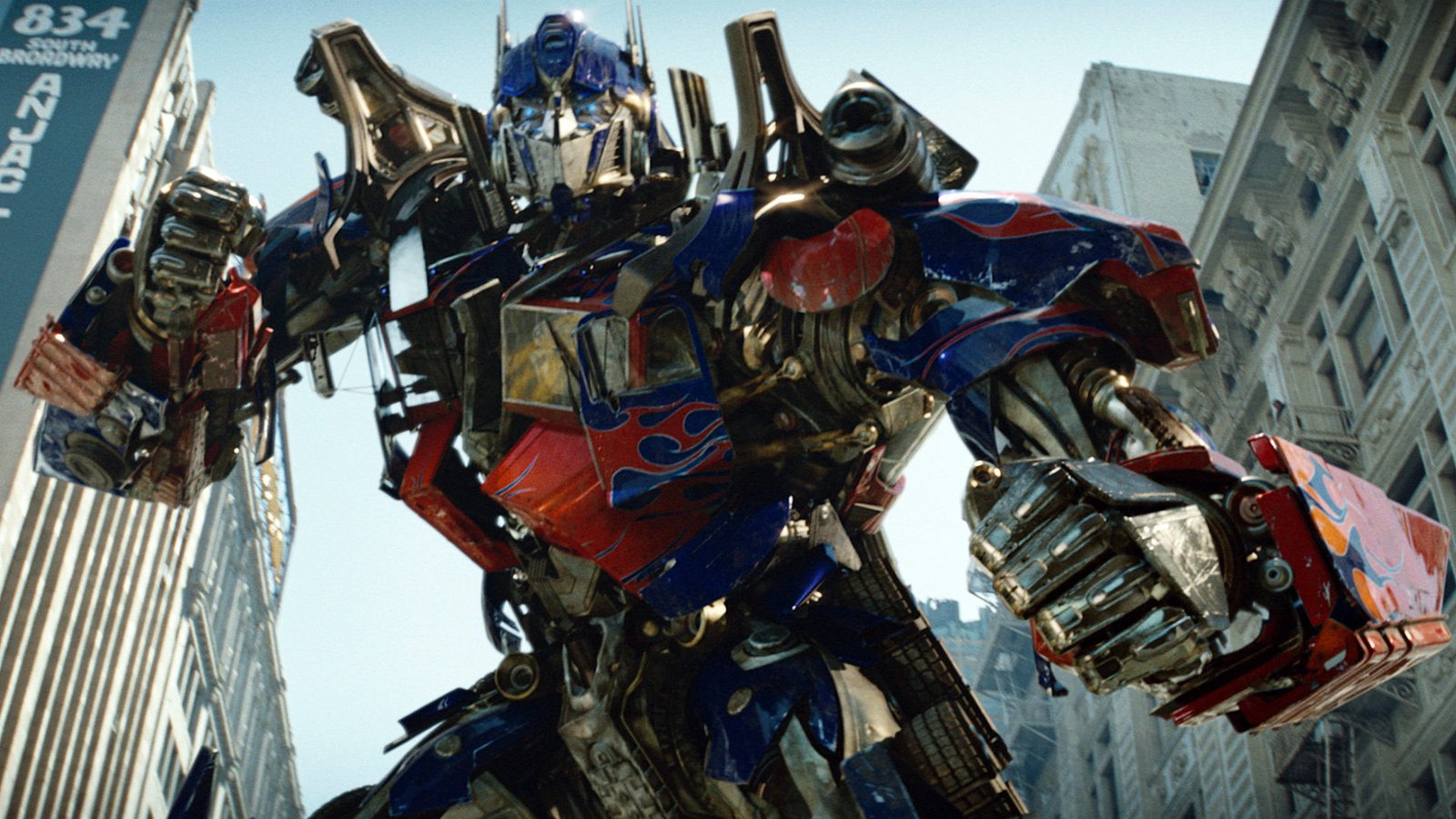
The visual architecture of Michael Bay’s Transformers (2007) represents a landmark convergence of high-velocity physical camera choreography, intense photochemical color grading, and groundbreaking photorealistic CGI integration. Collaborating with director of photography Mitchell Amundsen, the production abandoned static, observational framing in favor of an aggressive, kinetic visual language designed to ground colossal biomechanical entities within real-world physics. Captured primarily on 35 mm anamorphic film in a 2.39:1 aspect ratio utilizing Panavision Panaflex Millennium XL, ARRIFLEX 235, and ARRIFLEX 435 Xtreme cameras alongside Panavision C-Series, E-Series, and Primo anamorphic lenses, the film establishes a tactile, sun-drenched aesthetic defined by extreme contrast ratios, relentless multi-axis camera movement, and hyper-reflective metallic surfaces.
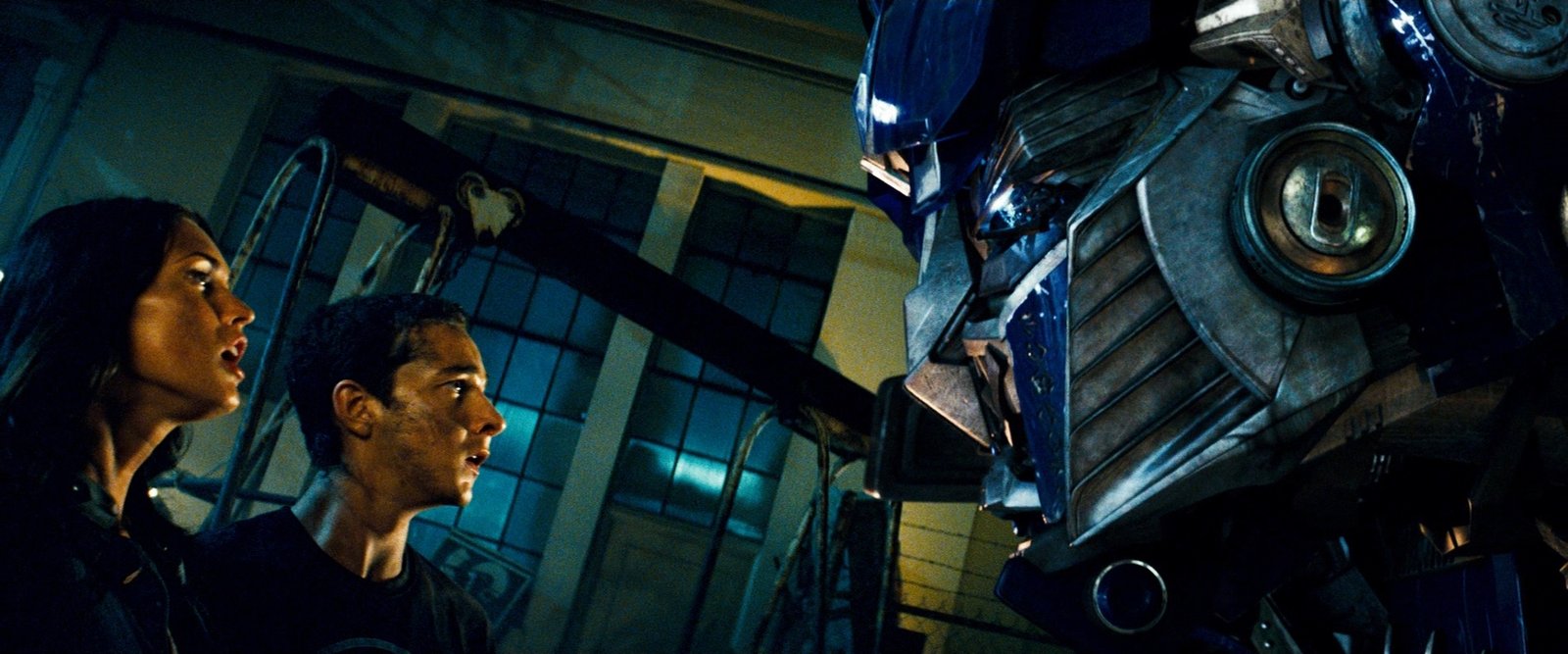
Anamorphic Optical Mechanics and Kinetic Camera Rigging
To prevent giant alien robots from appearing weightless against live-action backgrounds, Amundsen deployed wide-angle Panavision anamorphic primes—frequently favoring short focal lengths mounted on low-profile dollies, Steadicams, and custom high-speed Russian Arm tracking vehicles. Wide anamorphic lenses naturally exaggerate spatial perspective, edge distortion, and foreground-to-background separation, amplifying the perceived verticality and mass of 30-foot-tall mechanical structures like Optimus Prime and Megatron when photographed from ground-level low angles.
Rather than locking off cameras on static tripods to simplify visual effects match-moving, the cinematography prioritized continuous kinetic momentum across every sequence. Lightweight ARRIFLEX 235 handheld rigs and armoured Bell & Howell Eyemo crash cams were placed directly inside practical pyrotechnic zones, orbiting actors like Shia LaBeouf and Megan Fox, pushing rapidly through concrete debris fields, and tilting dynamically upward during transformation sequences. This deliberate introduction of handheld micro-jitters, rapid whip-pans, and organic horizontal anamorphic lens flares forced Industrial Light & Magic’s tracking pipelines to replicate authentic optical imperfections—such as barrel distortion, chromatic aberration, and shutter-angle motion blur—effectively tricking the human eye into perceiving synthetic Cybertronian shaders as physical objects captured through real glass.
High-Contrast Orange and Teal Color Space Calibration
The chromatic identity of Transformers is built around an aggressive push-pull color palette separating warm, golden-hour skin tones and desert sunlight from deep, saturated cyan shadows and cool metallic blues. Amundsen exposed Kodak Vision2 500T and 250D motion picture film stocks slightly rich to preserve dense negative information while letting specular highlights blow out cleanly across chrome bumpers, F-22 Raptor fuselages, and brushed steel armor.
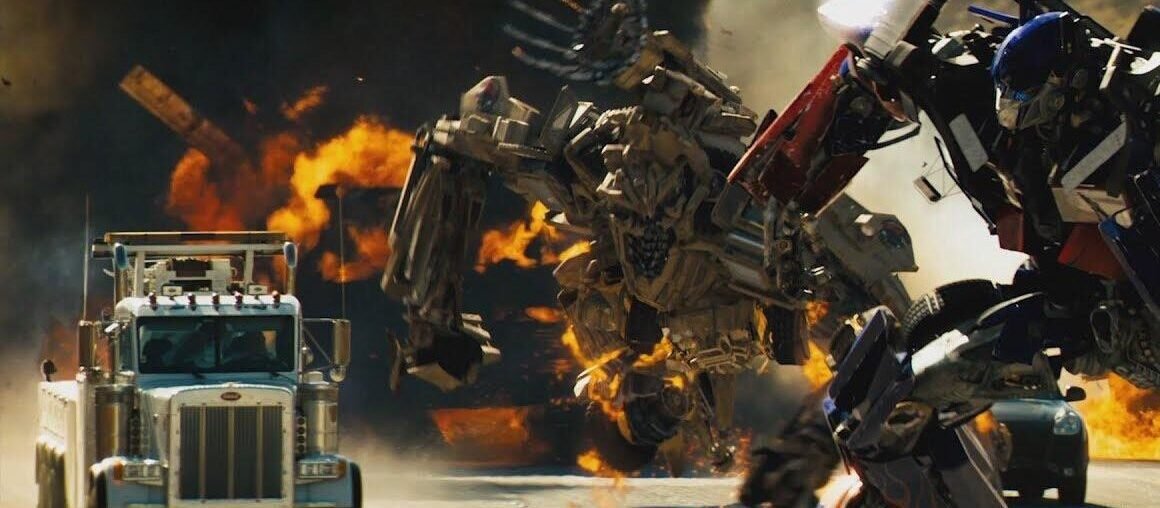
During the Digital Intermediate (DI) finishing process at Company 3, this photochemical foundation was pushed further to maximize visual separation in dense action frames. By crushing black levels and shifting ambient shadow values toward cool slate and teal while boosting amber pyrotechnics and sunlit dust clouds, the cinematography ensured that intricate, multi-layered robot silhouettes—such as Barricade’s highway pursuit of Bumblebee or the chaotic urban battle in Mission City—remained spatially readable even amidst rapid editorial cutting.
On-Set HDRI Telemetry and Hard-Light Specular Integration
Integrating thousands of interlocking, reflective titanium and automotive-painted plates into harsh exterior daylight required an unprecedented level of on-set lighting documentation. Before and after every major live-action take, the camera and visual effects crews captured full-sphere High Dynamic Range Images (HDRI) using mirrored chrome spheres and calibrated grey reference balls positioned at the exact spatial coordinates where the digital characters would stand.
Replicating Natural Hard Sunlight on Synthetic Shaders
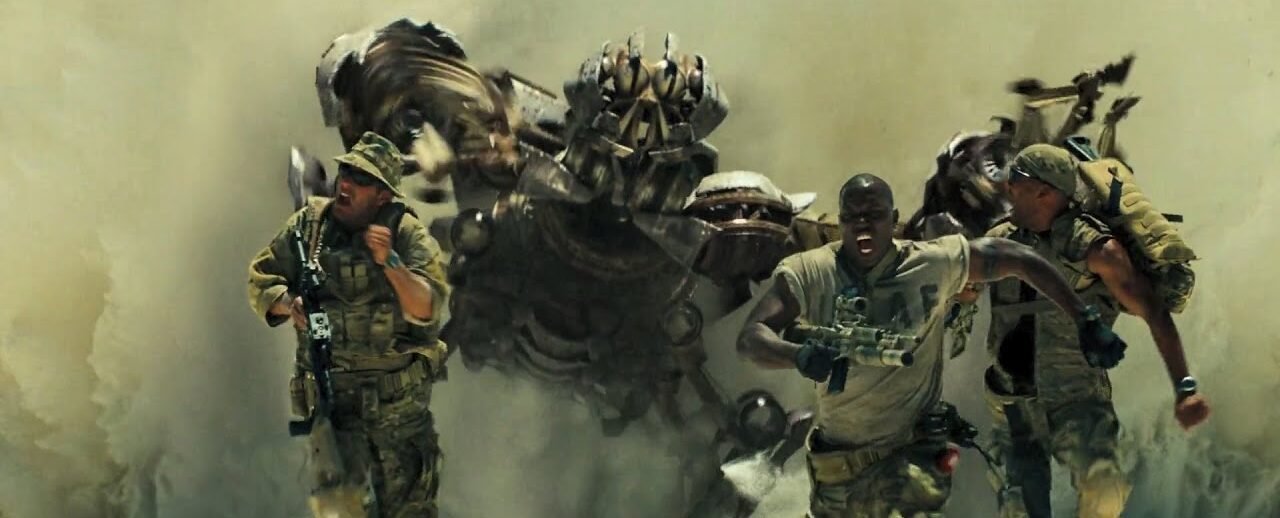
Unlike softer, heavily diffused studio setups, exterior sequences—most notably the nocturnal and dusk assault on the SOCCENT military base in Qatar by Blackout and the subsequent desert ambush by Scorponok—relied on raw, unmodified natural sunlight supplemented by powerful HMI backlighting, tungsten Dino arrays, and shimmering Mylar bounce boards. Because metallic automotive clear-coats and gunmetal alloys react instantaneously to directional light shifts, the digital lighting artists mapped the exact sun azimuth, sky dome luminance, and desert floor bounce from Amundsen’s on-set telemetry directly onto the ray-traced shaders.
When practical fuel-air explosions detonated or military helicopters passed overhead in the physical plate, corresponding transient light bursts were programmed to sweep across the Cybertronian chassis in exact frame-accurate synchronization. This strict discipline of capturing real-world lighting physics on location laid the foundational groundwork for modern real-time visual feedback systems, a technological lineage we examined in our Avatar (2009) virtual cinematography breakdown, proving that believable digital spectacle always depends on rigorous light-transport data.
Explore more deep dives in our Cinematography section.